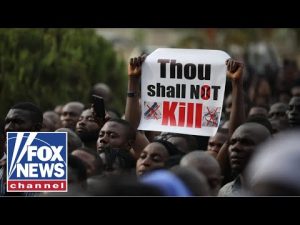
In the heart of West Africa lies Nigeria, a country bustling with energy and diversity, yet grappling with severe internal conflicts. Recently, the world watched as fresh reports emerged, spotlighting the plight of persecuted Christians in this nation. These reports highlighted not just the dire conditions but also the decisive steps taken by international players to intervene. One such intervention involved coordination between the United States and the Nigerian government to target and dismantle terrorist strongholds threatening to engulf the country’s Middle Belt in chaos.
The Middle Belt of Nigeria has been the epicenter of turmoil, with countless Christians forced to flee their homes. Many have sought refuge in Internally Displaced Persons (IDP) camps, living under dire circumstances. These camps are filled with stories of loss and survival, stories that paint a grim picture of the situation. There are families torn apart, mothers mourning their children, and communities devastated by relentless waves of violence perpetuated by roving bands of Islamic terrorists.
While societal tensions have always hummed in low frequency across Nigeria’s vast regions, the crescendo of violence in recent years has been particularly deafening. Thankfully, there appears to be a shift. Under the banner of coordination and diplomacy, the United States, with its arsenal of Tomahawk cruise missiles, has taken a stand against the marauding militants. This collaboration signifies a pivotal first step in pushing back against the tide of terrorism and sending a clear message: the global community won’t sit idly by while innocent lives are shattered.
Predictably, as with many international interventions, this move has sparked some debate. Critics, particularly those on the left, have questioned the scope and intent behind such strikes. Yet it’s essential to recognize the magnitude of the Christian population’s suffering. Reports suggest a staggering five-to-one ratio of Christians to non-Christians among those killed in these violent episodes, a statistic that underscores the urgent need for a tailored response to protect this vulnerable group.
Furthermore, the intricacies of Nigeria’s demographic landscape reveal a nation wherein one in every six Africans resides, making it a densely populated hub of cultures and religions. In such a complex society, the narratives that dominate media outlets can often be swayed by external agendas. However, the priority remains clear: ensuring the safety and security of all Nigerians, especially those disproportionately targeted due to their faith. In this endeavor, bipartisan support and international cooperation become not just strategic but moral imperatives.
As the world observes these developments, the hope is that this recent intervention heralds a new chapter for Nigeria—one of increased peace, understanding, and mutual respect across its diverse landscape. While challenges remain, and debates will undoubtedly continue, the undeniable truth is that strategic efforts to protect vulnerable populations could very well illuminate a path toward a more stable future for Nigeria. Let’s hope the light at the end of this profoundly dark tunnel shines brightly for all its citizens, regardless of their faith or background.