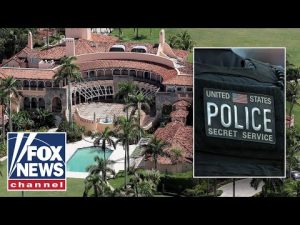
In the early hours of February 22nd, the tranquility of Mar-a-Lago was abruptly shattered when an unwelcome intruder attempting a seemingly reckless entry into the property met with deadly consequences. The individual, described to be male and in his twenties, was allegedly armed with a shotgun and equipped with a gas can—a combination that screams bad ideas louder than a toddler in a candy store. According to early reports, the audacious trespasser was confronted by vigilant U.S. Secret Service agents and a deputy from the Palm Beach County Sheriff’s Office. In a move that firmly proves Darwin’s theory of natural selection, the individual was shot on-site.
Mar-a-Lago, notably famous for its high-profile owner, former President Donald Trump, was not hosting any Secret Service protectees at the time. Nonetheless, the security team, all too familiar with the unpredictable nature of their line of work, reacted promptly to the perceived threat. With significant enhancements reportedly made to the estate’s security setup, including a technological facelift of sorts, it stands as a testament to the fact that sometimes, the human factor is crucial. When an intruder decides to test the limits of a secure area like Mar-a-Lago, it’s quite evident they’re not there to spread goodwill and merriment.
The Secret Service was quick to issue a statement outlining the incident, affirming that no agents or deputies were injured during the confrontation. While some might question the use of deadly force, it’s important to note that these agents operate under protocols that necessitate a fear of serious bodily harm or death before responding with lethal force. For those who think carrying a shotgun onto private property will end with nothing more than a stern lecture, perhaps it’s time to reassess their life choices.
As per established procedures, the incident is under investigation by the FBI and other relevant agencies. The involved Secret Service agents, meanwhile, have been placed on routine administrative leave, a common practice until the inquiry concludes. The painstaking task of determining the individual’s motives – aside from an apparent lapse in judgment – lies ahead. It serves as a stark reminder of the complex matrix of security measures that are anything but monotony for those tasked with protecting past Presidents.
Standing guard through the night is no walk in the park, as any Secret Service agent will tell you. The unpredictability of human behavior keeps them on their toes, and when an incident unfolds at such ungodly hours, snapping into action isn’t just expected—it’s necessary. As the details continue to emerge, one thing remains clear: probing into these incidents isn’t just about pointing fingers or attributing blame. It’s about understanding the risks involved in the high-stakes world of personal protection, where split-second decisions can be the matter between safety and catastrophe.