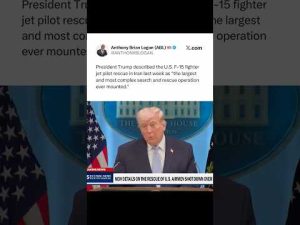
In the world of military operations, stories of bravery and resourcefulness often stand out, captivating the American public. Recent events involving a downed U.S. pilot in enemy territory have once again showcased the extraordinary training and commitment of our armed forces. The pilot, equipped with specialized survival training known as SERE—Survival, Evasion, Resistance, and Escape—demonstrated just how critical this preparation is for ensuring the safety of our troops in challenging situations.
The essence of SERE training is not just about survival; it’s a comprehensive approach designed to prepare soldiers for the unexpected. It requires them to assess their environment, treat any injuries, and make critical decisions about their next moves. When flying over hostile territory, the most realistic concern for any aviator isn’t just the mission at hand but also how to safely navigate an emergency if things go awry. The downed pilot, with resources that likely included a handgun and a keen sense of the tactical landscape, had to utilize his training effectively to avoid capture while signaling for rescue.
One of the remarkable aspects of this scenario, as highlighted by former CentCom Commander General Frank McKenzie, is the firm commitment held by the United States military: the principle of “leave no man behind.” This ethos is a fundamental part of American military culture, cultivated through decades if not centuries of tradition. When a pilot is down, an elaborate plan springs into action—a testament to the readiness and capability of the U.S. armed forces. The operations involved to retrieve a downed aviator are not only intricately detailed but also executed with an efficiency that reinforces the pride and professionalism of American military personnel.
It is worth noting that while one or two aircraft were lost during this mission, the value of human life far outweighs the loss of material assets. The process of constructing an aircraft may take years, but the military ethos of ensuring the safety of every soldier is ingrained in the fabric of our national identity. The pilot’s training, combined with the rapid deployment of a rescue operation, stands as a strong reminder of what American resilience looks like.
As the United States appears to be nearing the conclusion of its campaign in Iran, the events surrounding this particular operation offer an important reflection on the ongoing sacrifices made by our military men and women. Not only does this story inspire pride in American values and the commitment to brothers and sisters in arms, but it also reinforces the practical necessity of ensuring that our soldiers are always prepared, no matter the circumstances. In a world where uncertainties abound, having a well-prepared military is not just advantageous; it is essential.