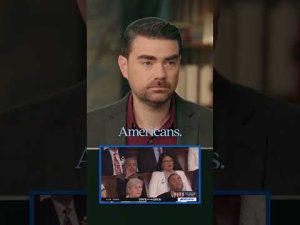
In today’s political arena, accuracy and bias have become significant topics of discussion, particularly within the media. During the president’s recent State of the Union address, a notable incident highlighted just how quickly misinformation can spread. Before the president even finished his traditional meet-and-greet with high-profile attendees, an erroneous report was making rounds, suggesting he had deliberately snubbed some of his own Supreme Court appointees. This wasn’t just a minor error; it was a glaring oversight that captured a moment of media haste and assumed narratives gone awry.
It all started with a swift greeting between the president and Chief Justice John Roberts, a moment that was innocuous in itself. However, some news correspondents surmised that the president had chosen to ignore Justice Amy Coney Barrett and others, deducing prematurely that he had selectively acknowledged justices. The misleading portrayal suggested a narrative of betrayal and resentment, claiming the president felt let down by the very justices he had appointed due to decisions not in his favor. Yet, the video evidence showed otherwise, indicating he shook all their hands.
This kind of assumption is part of a larger pattern where some media outlets appear to leap at the chance to criticize the president, often without substantial evidence. It reflects a desire to highlight discord and drama, potentially fueling divisive narratives. The eagerness to point out what was deemed a snub overlooks the fact that public figures are often subject to heightened scrutiny, where perceptions can easily morph into supposed reality.
Upon realizing their mistake, the correspondents had to publicly retract their earlier statements, acknowledging that the president had indeed greeted all the justices, including Barrett. This turn of events is a reminder of the crucial role journalists play in presenting factual information. The initial blunder underscores a need for more cautious reporting, especially about the nuances of personal interactions observed in public forums. The tendency to jump to conclusions based on preconceived notions can not only mislead but also exacerbate public skepticism regarding media integrity.
In the end, what was presented as a moment of controversy melted away into a rather standard protocol of politeness. The incident serves as a lesson on the importance of verifying facts before drawing conclusions in both politics and reporting. It also demonstrates the influence of media narratives, shaping public perception regardless of reality. It’s imperative that both media and its consumers remain vigilant in distinguishing fact from fiction, as the implications go beyond mere storytelling into the realm of influencing public discourse and trust.