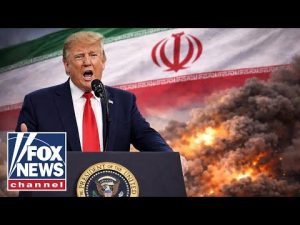
In the world of international relations, there are good guys, bad guys, and a whole lot of mess in between. Recently, the United States has made its stance abundantly clear, sending a strong message to the notorious terrorist group ISIS after a deadly attack that claimed the lives of American troops. Under the leadership of President Trump, the country has launched Operation Hawk Eye Strike, a mission aimed at hitting back hard against ISIS operatives in Syria. In a decisive show of strength, U.S. forces struck more than 70 targets, resulting in the elimination of at least five ISIS members. This wasn’t just another day at the office; it was a massive message to those who dare to threaten American lives—mess with us, and you will find out just how serious we can be.
As the dust settles from this military operation, many are left pondering what comes next. President Trump himself has characterized this action as a retaliation not only for the recent violence but as a way to prevent ISIS from regrouping. He has taken to heart the tragic loss of American lives: two brave soldiers and an interpreter taken too soon. With each strike, the U.S. is signaling that it will not tolerate attempts by terrorists to regain any semblance of power in regions where they’ve been decimated before. Trump’s philosophy is straightforward—restore peace through strength, and ensure that our enemies know they cannot strike the United States without facing consequences.
In addition to U.S. forces, Jordan, a reliable ally, has pitched in on these efforts as part of the coalition to prevent extremist groups from using their territory as a launching point for attacks. This cooperation between nations highlights a unified front against terrorism. It’s a reminder that when the chips are down, the U.S. has allies who are equally committed to combating these threats. To add to the drama, Israel has also detained suspected ISIS operatives and discovered weapons on its borders, heightening the urgency of the situation. As President Trump and Israeli Prime Minister Netanyahu prepare to meet in Florida soon, a strategy discussion about these escalating tensions is likely on the agenda.
While military actions might sound straightforward, there’s a complex web of issues that need addressing. Former military brass have pointed out that ISIS thrives in areas of anarchy and chaos. With the Syrian government struggling to maintain control, the instability provides fertile ground for extremist groups. Thus, the question remains: how does one eliminate a threat without enabling another? This is the challenge the U.S. faces as it moves forward, balancing the need for military action with the intricate political landscape.
Despite the apparent success of Operation Hawk Eye, some experts have raised concerns about potential retaliation on American soil. The remnants of terrorist cells lurking within our borders could activate under increased pressure. American security officials are acutely aware that desperate groups often resort to desperate measures. Thus, combating terrorism requires not only military action abroad but also vigilance at home to protect against any possible fallout from these operations. Addressing these threats won’t come from military strikes alone; it will also require smart intelligence operations and a cohesive policy that addresses the root causes of extremism.
In conclusion, the U.S. is laying down the law with Operation Hawk Eye Strike. It’s a powerful reminder that while America stands strong against ISIS and other extremist threats, the battle is far from over. Every strike is part of a broader strategy to secure peace and safety, both overseas and at home. As the nation watches, the hope is that this decisive action will not only deter further attacks but will also prevent future violence from those who wish to do Americans harm. After all, in this complex game of international chess, every move counts, and the stakes couldn’t be higher.