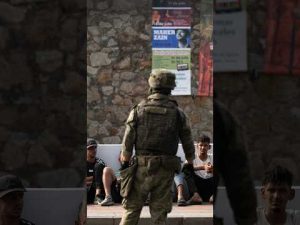
In an astonishing development, Spain has faced an overwhelming surge of nearly 60,000 migrants at its borders in just a short span of 48 hours. This influx has caused a panic among Spanish authorities, who are scrambling to manage the situation while trying to maintain some semblance of order. In response to this chaotic scene, Spanish officials have decided to install a containment barrier in an effort to regain control. It’s akin to putting a band-aid on a leaky dam—effective for the moment, but it’s clear a more robust solution is needed.
Reports indicate that while many of the migrants have moved on from the immediate area, a significant number are still hunkered down, resisting efforts to be relocated. The situation in the city of Ceuta has turned particularly troubling, with incidents of looting making headlines. It seems that desperation can lead to decisions one might not normally consider, and when the life jacket is tossed, some swim for safety while others grab whatever they can.
This incident raises pressing questions, not just for Spain but for nations around the world, including the United States. Experts are quick to point out that if left unchecked, such mass migrations could happen in American border towns too. Former actors-turned-political commentators are making the rounds to discuss the implications, suggesting that the recent events in Spain serve as a warning. If political leaders push for lax border policies, it could lead to a similar scenario here. Just imagine a bustling Texas town suddenly inundated with tens of thousands of migrants. It’s like throwing a surprise party—except instead of confetti, you get chaos.
On the topic of chaos, the ongoing immigration policies in the U.S. are also under fire. There’s a growing concern around the number of individuals slipping through the cracks—those described as “gotaways.” These are migrants who’ve evaded capture, and their presence raises questions about national security. The rhetoric suggests that there’s a difference between compassionate immigration reform and wild, open-door policies that risk public safety. The logic seems simple: if vigilance isn’t maintained at the borders, it’s a recipe for disaster.
Meanwhile, back in the States, local law enforcement is caught in the crossfire of changing immigration policies, especially in places like New York. Recent directives from the New York Attorney General have prohibited local agencies from cooperating with federal Immigration and Customs Enforcement (ICE), creating a tangled web of confusion. Those in law enforcement are now forced into a challenging position: comply with new regulations or endanger the communities they’ve sworn to protect. It’s like trying to navigate a maze while blindfolded. Instead of working together, local police officers find themselves at odds with ICE, exacerbating the very problem they’re trying to solve.
The question lingers—how can local officers ensure safety when the tools meant to bolster security are being taken away? Many who wear the badge understand that collaboration between local and federal authorities is vital. Without it, suspects deemed potentially dangerous may be released back into neighborhoods, leaving everyone wondering if they were really any safer. In this chess game of governance, it seems the pawns—those who protect our communities—are being sacrificed for political posturing.
Ultimately, the rising tide of migration issues in Spain and the evolving policies in America serve as reminders of the critical balance between compassion and security. As the world watches, it’s essential to remember that a secure border is a necessary foundation for a safe society. One can only hope that leaders recognize this as they change course, lest they find themselves at the center of their own chaotic migration crisis. After all, a little foresight can go a long way—and in politics, it may just make all the difference.