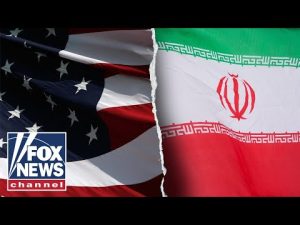
For nearly half a century, Iran has consistently declared its hostility towards America, not just in words but in bloody actions. From Beirut to Iraq, and extending through Afghanistan and Israel, the Iranian regime has left its mark, often resorting to violence against Americans. Their national symbol, a flag marked in red, might as well represent the blood of these lost lives. The ultimate question poses itself: do Americans wish to continue living under this ominous threat? Or is it time to seize what may well be the best chance for securing a peaceful future?
Rick Crawford, chairman of the House Intelligence Committee, addressed the ways in which a successful outcome in dealing with Iran could be achieved. It involves the severe weakening of Iran’s military capabilities, particularly their ballistic missile production and nuclear activities. No one can forget that Iran holds the title of the largest state sponsor of terrorism, as confirmed by the United Nations since the dreamy days of 1984. Their track record is clear. Enter into agreements with them, and you find yourself needing more than a magnifying glass for reassurance, as trust is hard to come by in this geopolitical chess game.
The escalation of tensions in the Strait of Hormuz is just another chapter in this ongoing saga. Iran has a laughable claim, assuming rights over this natural body of water, thinking they can charge passage tolls. President Trump is adamant about not allowing these imaginative toll booths to form in international waters. History has a nasty habit of repeating itself, as the incident in 1988 serves as a reminder of Iran’s previous games and their desire to hold the world at ransom through strategic choke points. Thankfully, this administration has sent a clear message: not on their watch.
Understanding the Iranian people’s desire—or lack thereof—for change is essential. Despite the regime’s tight grip, there are signs, even if faint, of an organic movement among the Iranian populace clamoring for new leadership. The opposition is against the mighty IRGC, which remains loyal to Iran’s supreme leader. The cultural and ethnic diversity within Iran offers hope that not everyone is behind the current regime’s perilous pursuits. This isn’t your usual cookie-cutter populace all singing praises to the supreme leader; there’s a broader spectrum of voices waiting to be heard.
In this intricate blend of politics and warfare, America can only hope—and perhaps aid—a shift in the Iranian political landscape. The potential for regime change forms part of a wishful outlook shared by many in the West. If such change becomes a reality, it would surely shift the tides, finally detaching a menacing thorn from the global community’s side, ending what has been a long-standing and deadly dance with Iran.