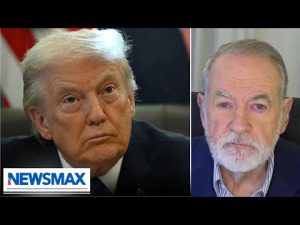
In a bustling Jerusalem, the United States Ambassador to Israel, Mike Huckabee, recently spoke on significant developments regarding Iran and the ongoing peace process in the Middle East. President Trump has laid down some serious ground rules for Iran: no nuclear weapons and an end to violence against protesters. Ambassador Huckabee, with a twinkle in his eye, suggested that Iranians should truly pay attention; the President is known for keeping his word, and it might be wise for Tehran to heed this warning. With powerful U.S. naval assets positioned in the region, it seems that the message is clear—better to have them there as a deterrent than to need them and not have them.
In an atmosphere thick with tension, Huckabee noted that while uncertainty looms in Israel, it’s crucial for citizens to remain prepared without panicking. He likened the current situation to when people stock up on bread and milk before a snowstorm, emphasizing readiness as a sensible approach. The Ambassador’s light-hearted analogy served a purpose—to encourage the populace to stay alert without fostering fear. After all, a lack of preparedness can lead to preventable chaos.
Transitioning to the matter of Israel and Gaza, Huckabee highlighted the substantial progress made during Trump’s presidency, particularly regarding peace agreements with Arab nations. He reminded viewers that for the first time in over a decade, no hostages are being held in Gaza, a remarkable achievement that could foster a more peaceful future. However, he acknowledged Israeli Prime Minister Benjamin Netanyahu’s concerns about potential disarmament plans for Hamas and the role that foreign soldiers could play in Gaza’s rehabilitation efforts. Huckabee portrayed Trump as a unique leader capable of garnering support from historic rivals, making diplomatic strides that would have otherwise seemed impossible.
As the conversation turned to the humanitarian situation in Gaza, Huckabee vehemently rejected the notion that Israel was withholding aid from the area. He challenged media narratives that painted a one-sided picture of Israel’s actions, positing that humanitarian assistance had never been higher during wartime. Drawing historical parallels, he emphasized that it is neither logical nor fair to expect a nation under attack to provide aid to its aggressors. What he labeled as “the biggest lie” propagated by the media was a call for a reality check, urging people to look beyond sensational headlines.
Before concluding the discussion, the Ambassador touched on an opinion piece by Hillary Clinton, in which she criticized President Trump’s supporters. Huckabee, speaking from a place of conviction, stood firm in response, stating that while opinions are free to fly, the former Secretary of State’s comments on empathy ring hollow considering her past actions during crises. This juxtaposition highlighted a divide in how empathy is understood and demonstrated politically. The discourse left viewers contemplating the continuing complexities of Middle Eastern politics and the ideological battles at home, all while Ambassador Huckabee navigated these topics with a blend of optimism, humor, and a commitment to truth.