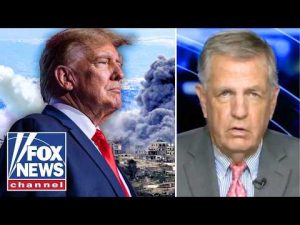
In the world of politics, where diplomacy often takes the back seat to theatrics, President Trump finds himself in the midst of discussions about ending hostilities with Iran. The president has declared a five-day window to see if a deal can be struck, a move that is surprisingly diplomatic for someone who usually prefers the straightforwardness of a sledgehammer to negotiations. It’s one of those rare moments where the president seems to be saying that it’s better to not raze everything to the ground if they can avoid it. One might recall that famous parenting advice—just because you can break every toy in the box to prove a point, doesn’t mean you should.
Meanwhile, updates on “Operation Epic Fury” paint a picture of significant action. With thousands of combat flights and numerous Iranian vessels either severely damaged or worse, one could say that the operation has lived up to its epic name. The images of U.S. and Israeli strikes across Iran certainly make it clear which chess pieces are in command of the board. Despite these dramatic displays of military might, the president voices a desire for diplomacy, which might seem at odds with the visuals of airstrikes. This duality leaves analysts pondering whether peace is on the horizon or if it’s simply another plot twist in the ongoing political drama.
Some key questions come into play here, as expressed by analysts like Britt Hume. Who exactly in Iran is at the negotiating table, and are they really pulling the strings? Inside Iran, reports suggest turbulence among their ranks—hardly surprising in a nation undergoing significant pressure from both internal and external forces. Moreover, whether any forthcoming agreement will be satisfactory to both the U.S. and its Israeli ally remains to be seen. Historically, this kind of delicate balance is hard to achieve. After all, as Iraq reminded everyone, winning the war often isn’t the hard part; it’s winning the peace that requires finesse, something akin to a bull in a china shop attempting ballet.
The president finds himself under political scrutiny, which is about as absurd as a scoop of ice cream melting under a summer sun. Critics of the administration demand a conflict with no casualties, zero equipment losses, and perfect execution of pre-set objectives—or it’s deemed a failure. The unfriendly media coverage only fans the flames, portraying every misstep as a calamity. In this treacherous landscape, the president needs to navigate more carefully than ever. Perhaps he should try his hand at politics’ most challenging sport: not saying everything that pops into his head.
Speaking of saying—or typing—things that one might regret, the president caused quite a stir with his social media antics over the weekend. He welcomed the news of former FBI director Robert Mueller’s death with all the subtlety of a bullhorn at a library, expressing a sentiment that raised eyebrows on both sides of the aisle. The backlash came swiftly, as this was directed at a man with a long history of public service, albeit one who had certainly been a thorn in Trump’s side. While the president’s frustration might be understandable given his history with Mueller, parading on Twitter with such remarks appears less statesman and more high school grievance. It’s a reminder that while the president might be entertaining to some, sometimes saying nothing might be the most impactful statement of all.