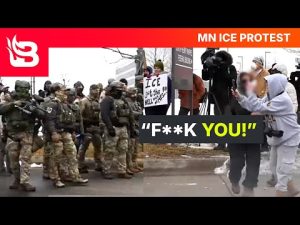
In a troubling incident that unfolded in Minneapolis, a woman who has taken up the mantle of an “anti-ICE warrior” was involved in an altercation with federal agents that escalated to a perilous level. This unemployed individual appears to have made a career out of protesting against Immigration and Customs Enforcement activities, using her SUV as a blockade against agents who were simply doing their jobs. The situation took a dangerous turn when she decided to press the gas pedal while an officer was positioned directly in front of her vehicle. This act not only put the officer’s life at risk but also highlighted the rising tension between law enforcement and protesters in today’s America.
The director of ICE, Todd Lyons, spoke with concern about this incident, noting that these types of violent confrontations are unfortunately becoming more common. He pointed out that the safety of officers is paramount, as they often face direct threats and attempts of violence while carrying out their duties. The law allows officers to protect themselves, and when a vehicle becomes a weapon in an altercation, it alters the entire scenario. The rhetoric surrounding these incidents can sometimes overshadow the grave realities that law enforcement face on a daily basis.
Much of the discussion around this incident circles back to the environment created by political figures and their statements. The rhetoric used by some elected officials has led to increased aggression toward ICE agents, making these officers targets for organized protests and harassment. While citizens have the right to protest, interfering with law enforcement operations is illegal and can lead to dangerous confrontations. In this instance, the woman’s decision to block agents and accelerate toward an officer exemplifies a concerning disregard for both the law and the safety of others.
One need only look at the broader implications of such actions. When protestors feel empowered enough to physically challenge law enforcement, it sets a precedent that could embolden further violent behavior. The director emphasized that as law enforcement continues to exercise restraint, there is a risk that individuals may push boundaries even further, thinking they will face no repercussions. This situation begs the question: at what point does protest become a threat to public safety?
As this incident develops, it also raises awareness about the environment in which federal agents operate. They are facing more than just the challenges of their jobs; they are navigating a minefield created by divisive political commentary that has, at times, made them the villains in a polarized debate. This ongoing struggle shows just how fractured the understanding of law enforcement and public safety has become in the current political landscape.
In conclusion, events like the one in Minneapolis remind citizens to approach discussions about law enforcement with nuance and a keen awareness of the implications of their actions and words. Law and order must be respected if communities are to function safely, and that requires mutual respect between citizens and those sworn to protect them. At the end of the day, it could have been anyone in the officer’s position, highlighting the unpredictability and potential danger inherent in these increasingly common clashes.