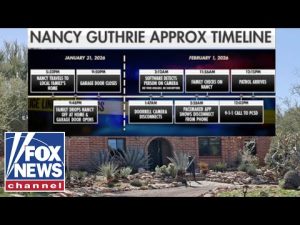
In a saga dripping with urgency and intrigue, the case of a mysterious ransom note and the subsequent law enforcement response has thrown the city of Tucson, Arizona, into the limelight. The story began with a note that kick-started a race against time, as authorities scrambled to meet tight deadlines imposed by the unidentified note-sender. The note, now infamous, has led the FBI to get involved, working closely with the Guthrie family to secure the safe resolution of this high-stakes situation. With a deadline looming at 5:00 p.m. local time, the tension has certainly reached a fever pitch in the usually peaceful city.
Rumor has it that federal and local law enforcement are pulling out all the stops. They reportedly have hauled in a tripod, sparking the curiosity of the media and onlookers alike. No detail is insignificant, it appears, when it comes to solving this conundrum. However, the involvement of Savannah Guthrie and her siblings has piqued the public interest, raising questions about their reactions and future discussions with those behind the ransom note.
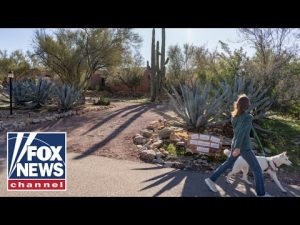
Deadline aside, the landscape of the case is set in a picturesque yet eerily quiet neighborhood in Tucson. Known for its stunning views and nature trails teeming with dense cacti, this is not your average suburban setup. Within minutes, one can drive from Nancy Guthrie’s home to various local shopping malls and dining options. As inviting as the area sounds for tourists and residents, the stark reality is that it has now become the backdrop for this unfolding drama. One can only imagine the change in ambiance from serene to suspenseful, as the possibility of a poorly devised escape plan or a well-drawn conspiracy hangs in the air.
Adding another layer to the complexity is the talk of technological hindrances. There has been mention of a non-active subscription to a Nest camera system that could have been turned on. Had the surveillance been operational, it might have caught some vital clues — a classic case of what-ifs. It leaves the public speculating about whether the case would have advanced more quickly had these digital eyes been watching. The neighborhood, despite its beauty, could become a maze of missed opportunities and unrealized potential for gathering evidence.
The investigation has turned into a real-life whodunit, drawing everyone from local authorities to corporate giants like Google into its orbit. Interestingly, criticisms have surfaced regarding how evidence and the crime scene were managed in the early days of the investigation. It seems hasty decisions may have allowed crucial evidence to slip through the cracks, and now, there’s a collective hand-wringing among those who wish the scene had been preserved with more foresight.
In the end, the case has become a tangled web of conflicting emotions and strategies, fraught with uncertainty and the hope that answers will appear before any harm befalls the key players. The authorities find themselves in a game of hide and seek, racing against time and shadows, all while trying to wrap their heads around a perplexing situation that seems more suited to the pages of a detective novel than the reality of Tucson’s quiet streets.