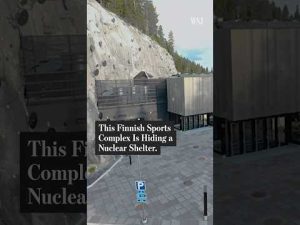
When people think about shelters, they might imagine fortified bunkers made of concrete, solid and impenetrable. But in this particular case, that stereotype just doesn’t hold true anymore. There’s a fascinating type of shelter that can house up to 7,000 people, and it’s designed with some pretty clever features to keep everyone safe during a crisis. This shelter starts off with an impressive set of blast doors that are nearly eight inches thick. These gigantic doors are no ordinary entryway; they’re designed to be manually closed and can withstand powerful blast loads. They may not be the most eye-catching feature as visitors approach the nearby sports arena, but they play a crucial role in ensuring safety.
As you make your way to the shelter, you’d find the doors set back about 80 feet into a cave, strategically angled to deflect any incoming blast wave. This design means that the walls bear the brunt of any explosion before it reaches the robust doors. The clever engineering continues with a pair of blast valves that help control airflow while keeping dangerous pressure waves at bay. It’s like a superhero defense system, working on the principle that while danger may come knocking, it won’t easily get inside!
But it isn’t just enough to keep out harmful blasts; the shelter must also be prepared for hazardous contamination. Immediately past the initial set of doors is a second, sealed set that leads to an airlock space. This area is so important that it contains two gas-tight valves, ensuring that anyone coming in from outside can be thoroughly decontaminated. Imagine a space where individuals emerge from chaos, only to face a strict routine of checking and cleaning before gaining access to the rest of the shelter. It’s a diligent process intended to keep everyone safe and sound, but also emphasizes the stark reality of a worst-case scenario—what if someone is too contaminated to be let in?
Hidden away in a small back room are the supplies necessary for keeping the massive shelter operational. Buckets lined up fill the room, waiting to be filled with drinking water for the nearly 7,000 people who may seek refuge within those walls. The strategic distribution of fresh water is vital because hydration can quickly become a concern in a stressful environment. Finding gas masks and batteries among the supplies further underscores the seriousness of the shelter’s purpose. It becomes clear that the goal is not only to house people, but to provide them with the essentials for survival.
Every inch counts in a crisis situation, which is why a simple measurement becomes A-Number-One on the checklist. A mere 0.75 square meters is allocated per person inside the shelter, as per Finnish regulations. This might not seem like much, but in times of distress, comfort takes a back seat. Survival is the priority, and every ounce of space helps accommodate those desperately seeking safety. When the situation calls for swift transformation—like turning a sports arena into a fully functioning shelter—time becomes the enemy. The sight of the setup, complete with makeshift toilets and temporary living conditions, contrasts sharply with any notion of comfort, serving as a reminder that when push comes to shove, the most important part of sheltering is just to be able to survive the storm.