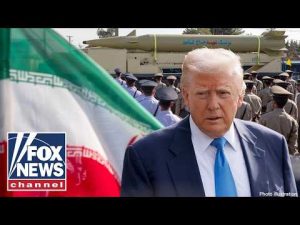
In these tumultuous times, Americans find themselves once again witnessing their nation’s military might unleashed across the globe. This time, it’s not just another firework show in the Middle East but a full-fledged barrage against Iran. As the strikes continue for the tenth consecutive night, there’s chatter that President Trump might be contemplating a return to all-out war. The prospect includes strikes on Iran’s nuclear sites and other strategic targets that the U.S. previously left untouched. Talk about upping the ante!
The backdrop to this scenario is as grim as it is familiar. Iran decided to escalate hostilities by killing three American service members, adding to the rising death toll that has now reached 17 American losses. In a scene that sounds like it was plucked straight from a tension-filled blockbuster, incoming Iranian missile fire set off alarms in Bahrain, while the Jordanians claimed success in shooting down several drones. Despite these provocations, the American response has been steadfast—an unwavering commitment to ensuring the free transit of commercial vessels through the strategically vital Strait of Hormuz. U.S. Central Command’s statement trumpets a figure that’s as potent as the nation’s military presence: the facilitation of around 900 commercial vessels and a staggering 450 million barrels of crude oil.
Meanwhile, on Capitol Hill, anticipation builds for a hearing that promises to delve deep into the nitty-gritty of the conflict. With Secretary of War Pete Hegath and Chairman of the Joint Chiefs Dan Kaine in the hot seat, lawmakers are poised to dissect the financial and strategic facets of this engagement. One wonders if these seasoned officials are prepared to play defense against the inevitable barrage of questions they’ll face. After all, if they can’t handle a group of lawmakers, handling a hostile regime half a world away might be asking too much.
As the drama unfolds, Iran appears resolute if somewhat misguided in its strategies. The regime’s spokesperson hinted at welcoming American forces with open arms should they decide to enter Iranian territory. We all know that’s likely to be about as warm a reception as a bear hug from a grizzly. In another head-scratcher of a move, Iran’s apparent relocation of nuclear centrifuges into the fortified depths of Pickax Mountain has raised eyebrows and alarms alike. President Trump’s response could very well include extending America’s military footprint with possible strikes on these strategic facilities, ensuring Iran’s nuclear ambitions remain just that—ambitions.
Not to be outdone, Iran’s proxy in the region, the Houthis in Yemen, posed its own challenge by announcing a naval blockade against Saudi Arabia. Rich Goldberg of the Foundation for Defense of Democracies reminds us of the stark contrast between democracies and Iran’s regime. Unlike Tehran’s elite, who are impervious to domestic pressures, democratic leaders like President Trump must navigate the intricate political landscape back home. Yet, Goldberg’s stance is clear: America must not tiptoe around diplomacy or toll fees; instead, it must remain committed to safeguarding navigation freedom—a conviction President Trump seems to echo.
As this chapter of global tensions plays out, one can’t help but wonder how much longer America will have to rain down its military wrath before reaching a resolution. With talks of possible negotiations and the involvement of regional players, the path to peace might involve more than just force. Here’s hoping that common sense prevails and cooler heads find a way to detangle this mess more efficiently than a bureaucratic meeting full of red tape. Until then, the world holds its breath, awaiting the next move in this high-stakes game of geopolitical chess.