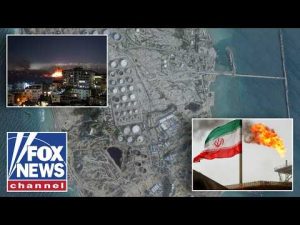
In the ever-tumultuous world of Middle Eastern geopolitics, the recent Iranian aggression towards the United Arab Emirates (UAE) is quite the explosive spectacle, no pun intended, of course. In an audacious show of force, Iran lobbed four ballistic missiles and unleashed six drones upon the UAE, apparently following up on a barely-veiled threat regarding the evacuation of key UAE ports. Imagine that: Your neighbor politely suggests you vacate your house because they might set it on fire—what graciousness!
As if the neighbors weren’t rowdy enough, Saudi Arabia had its own run-in with Iranian drones. They intercepted multiple drones, which is certainly one way to keep the flying pests at bay. Saudi residents were even put on notice for the possibility of more incoming projectiles. This doesn’t sound like a neighborhood you’d want to move into anytime soon. It’s like an exclusive club where the main attraction is sky-high pyrotechnics—on a loop.
Lucas Tomlinson reports from the relative safety of Dubai, noting that the UAE has been under continuous assault for weeks. Over 1,600 drones and nearly 300 ballistic missiles have rained down, thrice the number launched at Israel. Interestingly, Iran’s foreign minister insists that these are merely love taps aimed at American bases. Maybe he thinks it’s more comforting for UAE citizens to imagine the destruction isn’t personal, just collateral. Somehow, that doesn’t feel like a soothing reassurance.
This military back-and-forth extends into some oil-driven chess moves. After an American attack on Iran’s strategic oil hub at Har Island, Iran retaliated at the UAE’s Fujairah oil terminal. Such tit-for-tat exchanges indicate an intricate dance around the Strait of Hormuz, a crucial chokepoint for global oil supply. With Iran boasting about allegedly closing off the strait to American and Israeli interests, one wonders if they have kindly informed the world’s economies teetering on this precarious balance. The world requires oil flows like morning coffee—it’s a necessity, not an option.
Amidst this high-stakes game, President Trump’s energy secretary optimistically opines that this conflict could wrap up soon. In such a theater, optimism is refreshing. It’s almost like watching an action movie where everyone knows the secret weapon will save the day, but critics (read: taxpayers) might argue the production costs are a bit on the high side. Meanwhile, the cost in human lives is all too real, as the tragic loss of 13 American service members during Operation Epic Fury reaffirms the high toll of conflict. The tragic downing of a refueling aircraft serves as a sobering reminder of the perilous work our military undertakes daily, deserving both recognition and respect.
These events highlight a persistent theme in global politics: the intricate dance of power, pride, and projection. The world watches as key players flex muscles, trade barbs, and, quite literally, fire shots across the bow. As always, the loudest voices will call for peace with a side of war machines ready at hand. It’s a saga that tells old stories with new chapters, continuously unfolding amid the shifting sands of the Middle East.