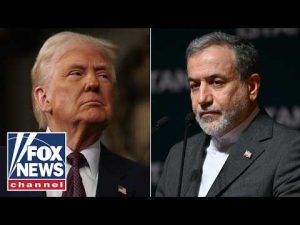
The latest developments in the ongoing conflict between the United States and Iran have taken a peculiar turn, with Iran making bold claims that the U.S. launched an attack from the United Arab Emirates. This accusation has come without a shred of evidence, yet isn’t it just like some to avoid accountability and pass the buck? Meanwhile, President Trump has been upfront, announcing that the U.S. successfully obliterated several key military targets. He made it clear that Iran’s oil infrastructure is staying out of the crossfire—at least for now. What a relief for the oil tycoons worried about their yachts.
In the United Arab Emirates, a day described as the quietest since the start of this turbulent clash saw only four ballistic missiles and six drones fired by Iran. Mind you, that’s hardly a whisper compared to the ear-splitting barrage of over 1,600 drones and nearly 300 ballistic missiles Iran has unleashed on the UAE since the conflict began. Seems like Iran’s foreign minister is proudly waving targets allegedly aimed solely at American installations, though one has to wonder how many decision-makers they can fool with that rhetoric when the debris is landing on hotels and skyscrapers.
The chatter about Iran’s strategic standoff concerning the Strait of Hormuz and Har Island sparks visions of a geopolitical chess game. While Iran threatens to flex its muscles by closing the Strait to American and Israeli interests, President Trump amusingly seems to have the same plans for Har Island, a critical asset for Iran’s oil exports. It’s a who-blinks-first scenario, with Trump taking his usual larger-than-life stance. One only hopes his energy secretary’s predictions of a peace finally dawning within a few weeks holds water and isn’t just wishful thinking.
On the ground in Dubai, the pulse of the city is palpably different. Typically bustling hotels now echo with emptiness, with occupancy plummeting to mere single digits. Even the famed Dubai nightlife has lost its shimmer, with nightclubs as deserted as a ghost town. It’s a stark reminder that while political leaders play their grand games, it’s the everyday folks and businesses taking the hit, a hard truth that tends to get lost amid the strategic rhetoric and military might.
Across the globe, the ripples of this conflict are felt in energy discussions and economic forecasts. ‘Stay tuned and subscribe,’ they say, promising more riveting updates as they unfold. There’s no lack of drama in this ongoing saga, as if viewers need enticing to follow what could very well decide the immediate future of global oil supplies and prices. While experts predict an end to the conflict soon, everyone holds their breath for resolution, hoping, perhaps cynically but sincerely, that cooler heads will eventually prevail and bring back normalcy to an otherwise fraught region.