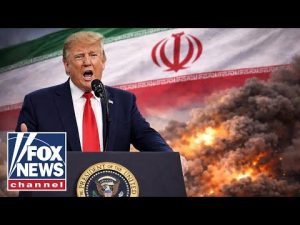
In a world where tensions seem to rise faster than a freshly baked soufflé, a Democratic congressman from California, Ro Khanna, is stirring the pot in Washington. Reports indicate that he is attempting to push for a vote on a war powers resolution as early as next week. However, it seems that House Democrats might be in for a surprise – they may not have enough Republican support to bring this resolution to fruition. Meanwhile, overseas, the Middle East is heating up, with Iran flexing its muscles and making bold statements at the United Nations.
Iran has officially approached the United Nations Security Council, basically waving its hands in the air and demanding international intervention against what it perceives as American military aggression. They’ve gone so far as to outline a list of “legitimate” targets throughout the region that they claim will be fair game if things escalate. This list includes U.S. military bases, which is akin to throwing a bigger log onto an already roaring fire. In addition to these provocations, Iran’s foreign minister, Abasar Aarashi, insists that they are still working on a proposal for future talks—which certainly sounds like a diplomatic version of trying to buy a little time.
Back in Israel, preparations are in full swing to brace for potential missile attacks from Iran. Reports suggest that senior military officials are reluctantly sifting through the reality that there isn’t going to be a foolproof solution to countering every missile that might come their way. This is certainly reminiscent of lessons learned the hard way in past conflicts, particularly during the 12-day war in June, when Iranian missile production capabilities were restored at a startling pace. Intelligence reports indicate that Iran is now pumping out a staggering 100 new ballistic missiles each month. Talk about a production line working overtime!
As discussions swirl among military and political experts, it’s notable that some believe the path to solving the Iranian nuclear question isn’t through drawing circles in the air with diplomacy. There’s sentiment that real change might only come from within Iran itself—specifically, through regime change led by the Iranian people. The insight hints that there are significant movements among the Iranian populace that could be the spark needed for change, with individuals demonstrating and expressing their desires for a different future. The hope is that these organized resistance groups gain momentum and support from the west.
Interestingly, as serious as this situation appears, it’s hard not to feign a chuckle at the irony of a nuclear negotiation negotiation. Some believe Iran has never negotiated in good faith. Their track record resembles that of a magician pulling rabbits out of hats but forgetting to provide any real answers. The fear is that, as negotiations unfold, Iran may simply be using them to stall for time, perhaps to sharpen their nuclear pencils even further. This situation paints a complex picture of military readiness, ongoing diplomatic maneuvers, and serious questions about the future of U.S.-Iran relations. Time will tell how this drama unfolds, but one thing is certain: it’s bound to be a bumpy ride.