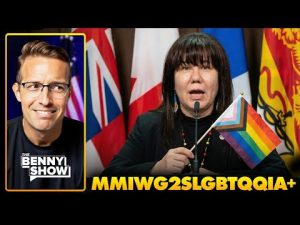
In a world filled with acronyms that seem to stretch beyond any reasonable length, Canada has just taken things to a whole new level. During a recent press conference, Canadian lawmaker Leah Gazan introduced the most mind-boggling string of letters yet, MMIWG2SLGBTQQIA+. Don’t worry if you found yourself reaching for a pen and paper to jot it down, you aren’t alone. Even tech wizards might mistake it for an uncrackable Wi-Fi password or the latest secret video game cheat code.
This expanded acronym is meant to be all-inclusive, covering missing and murdered indigenous women, girls, two-spirit individuals, and the entire LGBTQIA+ spectrum. It’s enough letters to make you dizzy just looking at them. Some folks are shaking their heads, wondering if every conceivable identity and plight now requires its own letter. It’s almost as if we’ve entered the realm of acronym inflation, where everyone and everything must squeeze into the growing alphabet soup to feel seen.
Critics argue that this latest attempt at inclusivity is less about genuine compassion and more about pandering to identity politics. By categorizing everyone into smaller and smaller subgroups, they say we’re missing the bigger picture. Elon Musk and Jordan Peterson, never ones to shy away from a strong opinion, have both weighed in, suggesting that Canada’s seriousness might be slipping. Whether they’re right is up for debate, but the internet is certainly having a field day with this one.
Of course, not everyone is laughing. Advocates insist that acronyms like MMIWG2SLGBTQQIA+ are important for raising awareness and bringing much-needed attention to marginalized groups. Yet, there’s a fine line between awareness and absurdity. At what point does adding more letters cross from inclusive to confusing? If nothing else, at least the growing acronym serves as an unintentional reminder that sometimes less is more.
While Canada wrestles with its newfound lengthy acronym, the message is clear: stay alert, keep a sense of humor, and remember not to overlook the real struggles faced by these communities. As for the rest of us, let’s just be grateful that we’re not tasked with explaining this linguistic marvel at the family dinner table. In the end, perhaps the best advice is to balance compassion with common sense and strive for clarity over chaos.