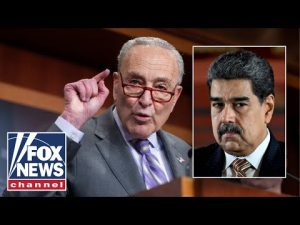
In the latest act of international intrigue, Venezuela’s embattled leader, Nicolás Maduro, has found himself in an unenviable position, presumably pondering his life choices from the comfort of U.S. custody. This dramatic turn of events marks a pivotal moment for South America, as it signals a potential shift in the power dynamics of the region. With Maduro and his wife no longer pulling the strings, the entire landscape of Venezuela seems ripe for a long-awaited overhaul.
The former regime of Venezuela typified what many would call a “narco-communist” government—an unholy marriage between drug trafficking and oppressive socialism. It wasn’t just the Venezuelans who were suffering under the strain of such governance; their issues spilled over into neighboring Colombia, affecting the region with their version of political and economic chaos. It’s as if there was a sale on mayhem, and everyone decided to take Venezuela up on its generous offer. With this change, there’s hope that order might finally be restored, echoing with the promise of a brighter, more stable hemisphere.
As far as regional stability goes, the significance of U.S. intervention cannot be overstated. With geopolitical meddling from actors like China, which is so eager to sink its teeth into South America’s resources, a firm stance by the United States to help guide events is crucial. The grip of organized crime, which extends from Mexican cartels to insurgent groups in Colombia, makes it clear that there is no room for slack in maintaining control over the Western Hemisphere. In short, it’s critical to put a cork back in the bottle of chaos that Venezuela has uncorked.
The implications of this development extend far beyond the Amazon rainforests or the Andes mountains. For South America, there lies ahead a challenge as much as an opportunity. The fight against crime, poverty, and bad governance is now more localized, offering countries a chance to fortify themselves against chaos. With hope, Colombians and their neighbors to the south can focus on building partnerships that foster prosperity and pull their nations from the brink of instability once and for all. It’s almost like a long-awaited chance to retake control over their destinies instead of perpetually having to react to crises.
Maduro’s detainment may be more than a temporary setback for a failing regime; it represents a beacon of potential for real change. The people of Venezuela deserve democracy and leaders who reflect their aspirations, not their fears. With a little luck and a lot of grit, this incident could usher in a new era of freedom, not just for Venezuela, but for the region. If South America can learn anything from its northern neighbor, it’s that sometimes, all it takes is one big move on the global chessboard to start rewriting the rules.