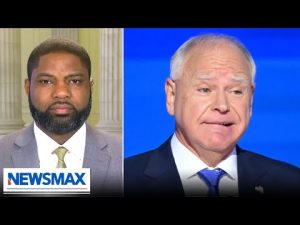
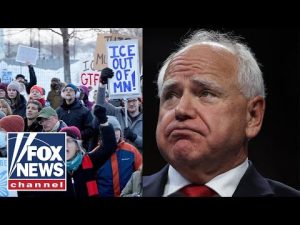
In another instance of political theater, Tim Walz, the governor in question, delivers a defiant proclamation: he will not resign his office despite choosing not to seek another term. The governor stands firm against perceived Republican aggression, painting himself as the last bastion of resistance against what he describes as a hostile campaign against Minnesota. What stands out, though, is the familiar diversion tactic at play—a classic strategy where the best defense is a potent offense.
His speech is loaded with incendiary assertions that smear Republicans broadly, portraying them as harbingers of doom for Minnesota’s streets and communities. What’s missing here is any acknowledgment of ongoing issues that reside closer to his own doorstep—challenges he could be addressing as part of his governance. Instead, he casts Republicans as mere cronies of former President Trump, deflecting responsibility for problems that might better be solved through bipartisan efforts and addressing the actual needs of Minnesotans.
While the governor’s declaration reveals a fervent desire to remain in power until his very last day in office, the substance of his commentary leaves much to be desired. There is little in the way of a clear, action-oriented plan to tackle real concerns about public safety or economic challenges. This omission might lead some to wonder if his goals are more rhetorical than pragmatic—whether this speech is a call to action or merely political posturing.
The rhetoric employed, an overarching denunciation of opponents, echoes sentiments seen in national politics—a reminder of the divisiveness so prevalent in recent years. This divisiveness often results in leaders bypassing genuine accountability by shifting the focus to political adversaries. It clouds the real debate, which should center around policies and solutions rather than further inflaming partisan tensions.
In the end, such speeches prompt skepticism about their authenticity. Does the governor truly believe his declarations, or is this simply a scripted performance to rally supporters while sidestepping tangible accountability for his tenure? As observers of the political landscape, it is crucial to question these narratives and seek leaders who prioritize practicality over partisanship, handling criticisms not with deflections but with integrity and accountability.