In the world of international politics, it often seems like the script for a high-stakes action movie. The latest drama unfolding involves President Trump’s attempt to draw a hard line with Iran, as two unnamed officials revealed to Fox News. Apparently, the U.S. has some hefty demands—like stopping all uranium enrichment, dismantling nuclear facilities, and Iran opening its vital strait of Hormuz without tolls—surely simple tasks for a regime known for its compliance and peaceful nature, right?
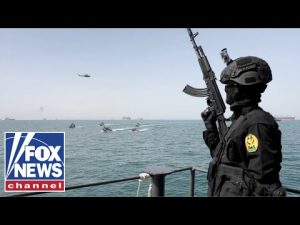
When Iran didn’t relent to U.S. demands during talks, President Trump, showcasing his characteristic subtlety, decided to impose a naval blockade on the strategic strait of Hormuz. Surely, that will patch things up nicely. Iran’s defiant stance didn’t come as much of a surprise to anyone, except perhaps those expecting them to fold like a beach chair under pressure. Their Revolutionary Guard made it quite clear that any warship would be treated as an unwelcome guest.
President Trump, never one to miss an opportunity to point fingers, criticized NATO for not assisting in this conflict—shocking, said no one ever. Trump’s skepticism towards NATO is as new as his affinity for tweeting. He’s been vocal about NATO’s limited action, or rather inaction, and it seems he’s tired of doing all the dirty work while they sit back and let the U.S. handle the heavy lifting.
If that wasn’t enough excitement, the president also issued a stern warning to countries in the region, pointing to Iran’s trigger-happy approach with its neighbors. Iran’s missile-party involved dropping missiles on nations like the United Arab Emirates and Saudi Arabia, unexpectedly spreading goodwill and encouraging regional players to huddle closer to the U.S.—either out of fear or strategic alignment. It’s like a twisted form of team-building exercise, and surprise! Everyone joined the Trump club faster than you can say “sanctions.”
In the background, the U.S. planned to introduce a naval blockade to stymie Iran’s financial flow from oil sales. Unfortunately, Vice President JD Vance’s long negotiation efforts didn’t yield the results the U.S. hoped for, as Iran stayed firm on its nuclear ambitions. It seems as though the U.S.’s “final and best offer” fell flat, leaving the Iranians unimpressed. This diplomatic impasse does make one ponder if a more creative call, like promising free unlimited internet or tickets to the next World Cup, might have gotten a different response.
Meanwhile, the Europeans attended the drama as spectators, perhaps enjoying their popcorn while forgetting that they’re sitting in the same theater. The commentary from some Democratic politicians suggested that President Trump’s “mean tweets” might be the reason allies aren’t leaping to join the fray. Oh sure, Twitter posts seem to be the root of all geopolitical woes these days.
In the face of all this, there remains a glimmer of hope—or possibly delusion—that the people of Iran could rise up and bring about change. But, predicting regime change is a perilous exercise in clairvoyance, much like trying to predict the weather in a British summer. Until then, the world watches as this political epic unfolds, with NATO members supposedly trying to figure out what message to put on the big banner they plan to hang over Trump Tower in a show of eventual support.