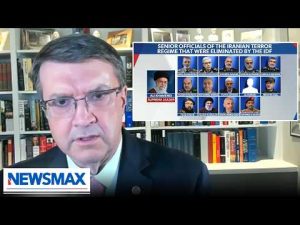
In a conversation about current events, former Navy intelligence officer Jack Bobich shared his insights on President Donald Trump’s unique approach to foreign policy. As the discussion unfolded, it became clear that Trump’s business background distinguishes him from traditional politicians. This difference, according to Bobich, plays a significant role in Trump’s ability to enact changes more swiftly than any president before him. The audience is reminded that Trump’s unconventional methods have not only raised eyebrows but are also starting to yield tangible results on the global stage.
Bobich notes that where past leaders leaned heavily on military might, Trump has found alternative strategies to address international challenges. Instead of committing countless troops to far-off lands, Trump is turning to innovative tactics that prioritize efficiency over endless engagements. For example, the mention of Operation Midnight Hammer showcases an approach that acknowledges the necessity of action without the burden of maintaining a large military presence. This methodology is a stark contrast to the previous administration’s focus on lengthy military operations that often resulted in confusion and drawn-out conflicts.
The conversation doesn’t shy away from the concerns of many within the America First movement. Some supporters voice worries about the implications of a more assertive foreign policy. Questions arise about the future of the MAGA movement, particularly regarding regime change and its implications for the economy at home. Bobich reassures the viewers that while there are legitimate concerns about international affairs, the current strategy is far from a call to endless war. He highlights that Trump’s focus is on achieving results while maintaining the core priorities of the movement: prosperity and security for Americans.
As the dialogue shifts, Bobich emphasizes that the current approach to foreign policy is not about dragging the nation into protracted wars like those seen in Iraq and Afghanistan. Instead, he reassures audiences that with Trump at the helm, the goal is a swift, decisive strategy that ultimately reduces the risk of long-term military deployments. JD Vance further elaborates that any ongoing actions are challenges that demand attention but do not reflect a traditional war model. The clear takeaway is that the Trump administration’s method allows for greater focus on domestic concerns while addressing critical national security issues.
As viewers absorb this information, the message remains clear: President Trump’s leadership is characterized by a transformative vision for America that prioritizes economic stability at home while navigating the complexities of foreign relations. Bobich’s perspectives underscore the necessity for supporters to stay engaged and informed, ensuring that the America First movement continues to adapt and flourish in an ever-changing world. The excitement surrounding Trump’s approach ignites a sense of optimism, making it apparent that, while challenges remain, there’s a confident stride forward in reshaping America’s role on the international stage.