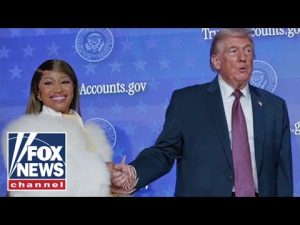
In a bold move to reshape the financial landscape for future generations, the former president announced the introduction of Trump Accounts at a D.C. summit. This initiative aims to provide every newborn American with a financial head start, purporting to secure their financial futures and, according to its creator, offer everyone a fair shot at achieving the American Dream. Witnessing the drama unfold were an assortment of supporters, including some unlikely allies like pop star Nicki Minaj and notable philanthropists. This colorful coalition of backers intends to ensure that newborns benefit from a windfall unimaginable to many, placing seemingly even the staunchest detractors on board the Trump train.
In the mirror-mirror world of political strategy, some see these accounts as a potential game-changer for Republicans heading into the midterms. It is quite a feat to create a policy so “transformational” that it captures a majority of popular support, even from across the political aisle where unity is as rare as a bipartisan handshake. The offer of setting children up with money that sat securely in an account to grow until adulthood is something most parents could get behind. However, one can’t help but wonder if this is the long-awaited silver bullet Republicans have been searching for, tucked away in those gilded accounts.
These accounts are designed to foster financial literacy among young Americans and allow contributors to invest beyond the limited scope of a standard 529 education account. Mark Bednar, a keen observer, emphasized the concrete benefits that the initiative is set to provide. With options to use the accounts for education, starting a business, or even relocating for a job, it symbolizes a radical shift from education-focused accounts to a more broad-minded financial future. The end goal, or so it’s set out, is to empower families to equip their children for bright and prosperous futures, which just might be the sweet tune to play on the campaign trail.
Amidst the fanfare, however, the political landscape remains tumultuous with Senator Chuck Schumer pushing a different set of demands aimed at immigration and border control. Discussions have emerged about ending certain immigration patrol practices and enforcing accountability measures. In the meantime, negotiations between the White House and Senate Democrats are ongoing, with the risk of a government shutdown looming large if an agreement is not reached. Here lies an opportunity for the “Negotiator in Chief” to employ his signature deal-making skills, although past experiences suggest any resolution is often met with skepticism at best.
It remains to be seen whether this groundbreaking policy will indeed avoid the pitfalls of shutdown politics and appease Democrats long enough for meaningful compromise. The playful reflections on past Capitol Hill antics, such as fines for not adhering to mask mandates, remind everyone that political playbooks are laden with irony. However, the discussions occurring now set the stage for what might be an impactful—or merely theatrical—chapter in American policy. The drama continues to unfold, just as one might expect in the world of Washington, where reality frequently outpaces imagination.