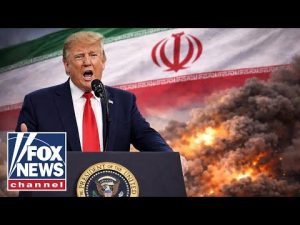
In the ever-entertaining playbook of global power dynamics, another chapter unfolds as characters of intrigue and strategy once again take the stage. This time, it’s a story with a thrilling screenplay that unfolds not in far-off territories, but right in America’s backyard. The scene picks up as the Chairman of the House Foreign Affairs Committee discusses a recent operation, thanking President Trump and Secretary Rubio for their leadership in orchestrating a calculated strategy that demonstrated firm resolve in the face of potential threats from powers such as China, Russia, and Iran.
In a move that had suspense and drama, akin to a spy thriller, the President chose a strategic path that involved keeping the plan closely guarded from the prying eyes of Congress. After all, it’s no secret that the halls of Congress have more leaks than a rusty colander. The fear was that any leaked information could have reshaped the outcome dramatically. The decision, whether viewed as tactically astute or controversial, was made to protect American interests without jeopardizing delicate operational details.
Playing out against a backdrop of shifting allegiances, the operation also had another layer of intrigue involving diplomatic tightropes with other countries in Latin America. The narrative pivoted with a careful examination of consequences versus the rewards of the mission. The Chairman agreed with the President’s approach, mentioning very specific threats that could not be ignored. In a shrewd yet amusing assessment, he suggested that there are some in government who couldn’t hold water in a bucket with a lid on, let alone keep secrets safe.
On the international front, Venezuela’s transition was highlighted as a matter of utmost complexity. The operation aimed to sever ties with unfriendly alliances and to steer Venezuela towards becoming the beacon of potential it once was in South America. The United States meticulously strategized a transition that would enable lines of communication to remain open with friendly nations, while keeping adversarial entities like Iran and Cuba at bay. To borrow from the world of bomb technicians, this was akin to navigating through a minefield—caution and precision were the order of the day.
As the conversation pivoted to compare and contrast previous administrations’ approaches, the narrative highlighted how sharply different President Trump’s strategies were from the so-called debacles of the past. The Afghan withdrawal under a different administration was presented as a textbook example of chaos, ripe for criticism. Meanwhile, the operation in Venezuela was hailed as a precise and calculated move, steering clear of long, drawn-out conflicts that have often been the bane of preceding administrations. The focus was on achieving objectives without unnecessary exposure to risk, illustrating a clever balancing act of diplomacy, defense, and strategic foresight.
So, in this episode of geopolitical chess, the pieces were moved with calculated precision. President Trump is credited with orchestrating this operation with distinguished finesse, proving that sometimes, keeping secrets from chatty lawmakers is indeed the best policy for national security. While the dust settles on this latest theater of political strategy and clandestine operations, the narrative remains one that promises intrigue at every turn—and perhaps a tad of well-deserved egg on certain political faces.