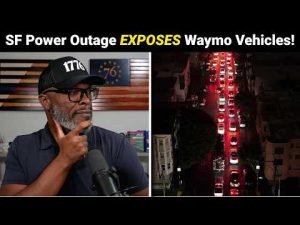
The recent power outage in San Francisco serves as a wake-up call for anyone putting blind faith in the growing trend of driverless and electric vehicles. Over the weekend, 23,000 residents found themselves without power due to an unexpected equipment failure at a substation, leaving many of the city’s essential services in disarray. Amid this chaos, driverless cars, designed to be the future of urban transportation, demonstrated just how unprepared they are for such situations.
San Francisco’s outage was more than a mere inconvenience; it was a testament to the fragile nature of our reliance on electricity. When the streetlights went out, so did the functionality of driverless vehicles. Unlike human drivers, these autonomous machines couldn’t comprehend the necessity of a four-way stop. Stuck in the middle of intersections, they became obstacles rather than facilitators of traffic flow. This scenario underscores the limitations of entrusting machines to make decisions that require human judgment.
Relying entirely on an electrical grid for everyday transportation raises significant concerns. These driverless vehicles need constant power, both for charging and for the dynamic systems that guide them through traffic. But when the grid fails, as it did this past weekend, an entire network of transportation can stall. This dependency highlights a core problem with the push toward all-electric, autonomous transportation: it sorely lacks resilience. When technology fails, as it inevitably does, the fallout can be substantial.
Furthermore, the promise of “green” technology in these vehicles isn’t as straightforward as it seems. While aiming for an environmentally friendly future, the current demand for electricity to support these vehicles often still relies on fossil fuels. This paradoxically increases demand for non-renewable resources, undermining the very purpose of these green initiatives. It’s a stark reminder that so-called progress must be carefully weighed against real-world implications.
This incident in San Francisco serves as a sobering glimpse into a potential future dominated by electric, autonomous vehicles. It raises important questions about safety and practicality in the context of technological advancement. Rather than rushing headlong into a future reliant on driverless cars, it’s crucial to pause and consider how best to integrate new technology with established systems. The necessity of human oversight and intervention should not be dismissed. Instead, it’s important to ensure robust, reliable infrastructure that supports the vision of a high-tech future while maintaining practical, common-sense solutions that are immediately actionable and resilient in times of crisis.