**Supreme Court Unleashes Tariff Tidal Wave: Trump’s Economic Policy Takes a Hit!**
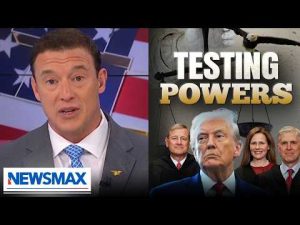
In a groundbreaking decision that sent ripples through financial markets and businesses alike, the Supreme Court recently ruled against former President Donald Trump’s massive Liberation Day tariffs. With a majority vote of 6 to 3, the justices determined that Trump lacked the authority to impose these sweeping tariffs under the International Emergency Economic Powers Act (IEEPA), a move that many have described as one of the most significant legal rulings in recent memory. The implications are vast, with companies potentially facing the prospect of refunds amounting to billions of dollars.
To understand this situation better, let’s take a moment to digest what the Liberation Day tariffs really were. Instituted as part of Trump’s aggressive economic strategy, these tariffs targeted allies and adversaries alike, specifically aiming at countries like Mexico, China, and Canada. Their justification was rooted in halting the influx of dangerous substances, including fentanyl. Yet, while the goal might have sounded noble, the courts found that the power to impose such sweeping tariffs was a no-go for the president under current law.
The legal battle leading to this decision was a long and tumultuous one. Prior to the Supreme Court’s involvement, two lower courts had already ruled against the Trump administration, deeming the tariffs unlawful. Yet throughout these proceedings, the tariffs sat in limbo, still impacting companies and consumers. After this landmark ruling, however, those levies have now been struck down, sending a clear message about the limits of presidential power in imposing tariffs.
As if that wasn’t enough, the ruling also carries a retroactive effect, opening the floodgates for companies to file for refunds on the massive tariffs they’ve already paid—an estimated $175 billion as of recent totals. For context, more than 1,000 companies had already preemptively thrown their hats in the ring with lawsuits, anticipating this very outcome. This situation has sparked a Wall Street frenzy where financial firms have swooped in to buy the rights to refund claims, offering importers quick cash in exchange for a potential payout on the larger refund later. It’s a game of economic chess, with plenty of money at stake!
While the court’s ruling may spell relief for countless businesses, it’s important to remember that this doesn’t completely dismantle tariffs altogether. Specific tariffs on goods like steel and autos remain intact, imposed under different and more explicit legislative authority. Trump officials are already expressing intent to turn the page, hinting at possible new tariffs under alternative legal frameworks. This ongoing saga leaves both supporters and critics of tariffs watching closely, as the implications for trade, jobs, and prices become more complex.
In summary, this Supreme Court decision marks a significant blow to Trump’s signature economic policy, reshaping the landscape of U.S. trade and tariffs. It underscores the vital checks and balances built into our government, reminding everyone that even the mightiest powers have limits. As companies gear up for potential refunds and the government explores new avenues for imposing tariffs, the business world is braced for a whirlwind of change. The next chapter in this saga promises to be just as unpredictable—stay tuned!