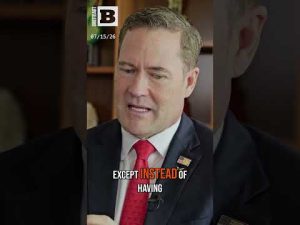
In the world of border security and immigration enforcement, it’s clear that clarity is not on the menu, especially with the recent buzz around ICE vehicle stops. Just when one might think vehicle stops, a rudimentary component of law enforcement, are a given, they become a spectacle of political intrigue. Recently, there was a brief pause on these stops, prompting some to suggest it was an overreaction. Thousands of such stops happen monthly without incident, and yet, the president appeared rather perturbed by this development.
Tom Homan, a veteran in the border security game, weighed in with a level-headed perspective. He sees vehicle stops as an essential tool for ICE and believes in their necessity. Despite the noise, he doubts that Mark Wayne Mullen, the source of this pause, ever intended to toss the stops into the dustbin of history. Instead, Mullen seemed more focused on ensuring agents had the right safety training. Homan’s primary concern is the rising danger ICE officers face, fueled by political rhetoric that encourages people to avoid compliance with immigration laws, resulting in increasing assaults on officers.
Now, Homan put his finger on the pulse of the real issue: the divisive rhetoric from some Democrats. Encouraging individuals to resist law enforcement is reminiscent of playing with fire, and Homan predicts that the continuation of such rhetoric will inevitably lead to more bloodshed. The debate on immigration rarely pauses to consider the safety of the ICE officers working in this highly charged environment.
On training, Homan assures that ICE agents undergo rigorous preparation. Vehicle stop training matches, if not mirrors, the standards of border patrol and traditional police academies. With a curriculum focusing on practical aspects such as when and how to stop a vehicle, engage its occupants, and assert legal authority, one might wonder why there’s such skepticism regarding the agents’ capabilities. Despite the surging threats and physical attacks against them, ICE officers perform admirably, suggesting that doubts about their preparation may be more politically expedient than factually based.
The subplot to this vehicle stop drama touches on a broader immigration issue. How could someone cross the border and receive work authorization last spring? It’s a head-scratcher even Homan is trying to unravel. Shining a spotlight on what many see as lenient policies that contradict law enforcement efforts, Homan affirms President Trump’s commitment to empowering ICE. Enthusiastically, he points out the high arrest numbers as evidence of this resolve, much to the chagrin of those who seemingly advocate for open borders. With the mainstream media eager to highlight disparities rather than facts, Homan stands firm on the need for clear and coherent immigration enforcement.
As the conversation wraps, it circles back to the underlying political motives some attribute to the Democrats’ immigration stance. Homan argues that the emphasis on leniency is a strategic gamble to retain future voters. It appears there’s a political chess match over who future Americans might be and which party they’ll support. Amid this political theater, proponents of stringent border policies stress that every deportation under President Trump not only secures the border but sends a powerful message: illegal immigration will not be rewarded. Let it be known, says Homan, under this administration, there’ll be no equivocating on border enforcement.