**Trump’s Ceasefire Agreement with Iran: A Diplomatic Detour Worth Taking**
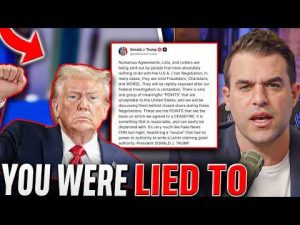
In a surprising twist in international relations, President Donald Trump announced that the United States has reached a ceasefire agreement with Iran. On a bright Tuesday, Trump took to True Social—a platform where brevity meets bravado—to share the details of this significant development. He declared that after discussions with the Prime Minister of Pakistan, Shibbash Sharif, and Field Marshall Assim Munir, a plan had been hatched to suspend military action against Iran for a period of two weeks. This ceasefire, he mentioned, hinges on Iran’s agreement to fully open the Strait of Hormuz, a crucial waterway for global oil transport.
In a world where missiles often roar louder than diplomacy, Trump’s announcement offered a glimmer of hope for a de-escalation of tensions. The ceasefire is described as a “double-sided” agreement, signaling a bipartisan effort to stabilize the tumultuous relationship between the U.S. and Iran. It seems both sides are in need of some breathing room, an opportunity to negotiate terms without bombs flying overhead. The President indicated that, during this two-week pause, there will be a focused effort to finalize a more substantial and lasting agreement.
However, this is not just about diplomacy; it’s also a matter of national security. During a press conference preceding the ceasefire announcement, Trump shared insights into some troubling leaks concerning military pilots. He noted that sensitive information was released prematurely, putting a pilot’s safety at risk. It’s a reminder that in the chaos of conflict, some individuals exploit situations for notoriety rather than considering the lives they may endanger. This situation, according to the President, has far-reaching implications for how information is managed during times of war.
One of the most astonishing aspects of the ongoing narrative is Iran’s notorious reputation for offering awards for capturing U.S. service members. Trump elaborated on this, underlining the complexities of wartime dynamics, where not only do governments grapple for power, but private individuals may be incentivized to undermine their own countries’ interests for a quick payout. The stakes are high, and the potential consequences could be grave. With millions vying for a chance at the prize, it’s a dangerous game indeed.
Now, one cannot help but marvel at the intertwining of humor and dire situations—the absurdity of a high-stakes geopolitical chess game mixed with the potential for a made-for-TV drama. In grappling with the challenges posed by leaks, the President vowed to take measures against media outlets that jeopardize national security. It’s another example of the thick “fog of war” that serves to confuse not only military personnel but also the general public, as news cycles churn out stories faster than they can be verified.
In conclusion, President Trump’s ceasefire with Iran presents a unique opportunity for dialogue and de-escalation. Although it may be too early to assess its long-term effectiveness, this step offers a momentary reprieve from escalating tensions. It emphasizes the need for careful negotiation away from the battlefield and sheds light on the unpredictable nature of modern warfare. Whether this pause leads to a fruitful outcome remains to be seen, but for now, we can only hope that common sense prevails in the corridors of power. Like a well-placed joke in a tense situation, laughter might not solve world issues, but it might just lighten the load of those working tirelessly for peace.