For nearly five decades, the role of the American president has seen its fair share of challenges, twists, and turns. In a recent interview, one former president took the opportunity to highlight a unique perspective on a controversial issue—the decision-making around military actions in Iran. It seems that this leader believes he is daring to tread where others have hesitated, claiming that he is the one to finally take the bold step that many of his predecessors only wished they had.
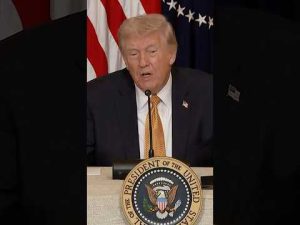
During the discussion, this president explained how past leaders, despite their silence on this topic, were very much aware of what needed to be done. He recounted a conversation with an unnamed former president who expressed a lingering regret about not taking the same actions during their own terms. The current leader revealed that this former president openly stated, “I wish I did it,” implying that there is a shared understanding among some of who has held the office that decisive action was needed far earlier.
The conversation took a rather playful turn when the host of the interview tried to pry a name out of him. The current president danced around the topic, refusing to disclose which former leader he had spoken with, stating that naming names could land his predecessor in a bit of a pickle—especially since the past president in question may no longer be in a position to defend themselves. It’s understandable; after all, political careers can be as fragile as a house of cards in a windstorm.
This situation presents a peculiar phenomenon—what some are calling “Trump arrangement syndrome.” It implies that many individuals, particularly in the political sphere, either struggle to comprehend or outright reject the current president’s approach and policies, regardless of their merits. It’s almost a rite of passage for those who have served in the White House to share secret regrets and unfulfilled ambitions, especially when discussing matters that resonate with national security.
The exuding confidence of the sitting president serves as a reminder that sometimes, bold action is perceived as necessary even when it comes with the risk of stirring the pot. As the nation watches closely, one can only wonder what implications this will have on future policies and relationships both locally and internationally. Regardless of past regrets and current decisions, it’s clear that this president is stepping forward where others feared to tread, for better or for worse.