**America’s Bold Step: The Strategic Move to Car Island**
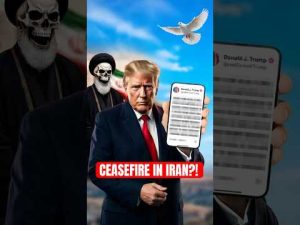
In the world of international politics, few names carry as much weight as Donald Trump, especially when it comes to his long-standing stance on Iran. A recent report suggests that Trump is considering a daring military maneuver involving Car Island, a critical oil hub for Iran that handles a staggering 90% of the country’s oil exports. This proposed operation is not about initiating a new conflict but rather about securing a strategic advantage and signifying strength to a regime that has long been a thorn in America’s side.
For more than three decades, Trump has predicted what actions would be necessary to put Iran in its place. While critics may scoff at his bold prophecy, the current administration is now evaluating the potential repercussions of taking control of this vital asset. The implications of this potential seizure are significant, not only for America’s energy independence but also for the global oil market, where Iranian aggression has wreaked havoc. The Strait of Hormuz, a key shipping route, has been choked with threats and actions from Iran, which impacts everyday Americans every time they fill up their gas tanks or pay their utility bills.
Historically, previous administrations approached Iran with a conciliatory attitude, sending them pallets of cash and desperately negotiating for nuclear deals. However, Trump’s method hinges on a powerful principle: to negotiate with strength rather than weakness. If Car Island were to be taken, it would order Iran to either withhold funding from its military apparatus or risk leaving millions of citizens in the dark. This strategic leverage is not only about military might; it’s a direct approach to safeguarding the American way of life, as well as putting Iran’s aggressive actions on notice.
As tensions ramp up in the Middle East, many are asking, “What does this mean for my family?” The answer lies in inflation and economic stability, which are already being threatened by tumultuous global politics. The folly of failing to address Iranian threats is evident, as they have been rapidly expanding their military capabilities, with ballistic missiles capable of reaching European cities. Amid these tensions, questioning the future of personal savings is warranted, making alternatives like gold investments increasingly appealing as a hedge against ongoing uncertainty.
The ongoing military discourse has become the subject of intense debate in the political sphere. Remarks from various leaders indicate a willingness to explore all options, including deploying ground troops to secure pivotal assets like Car Island. Indeed, even within the administration, discussions about the feasibility and risks of such operations highlight a shift toward a more assertive U.S. presence in the region. The rationale is clear; by cementing control over Car Island, the regime that has historically funded terrorism and propagated unrest would find itself considerably weakened.
In the face of these bold propositions, the American public must grapple with the implications of a potential military engagement. No one wants a repeat of the protracted conflicts of the past, but the urgency of the situation cannot be overstated. Taking firm action may be precisely what America needs to demonstrate that strength leads to peace. While the allure of a peaceful resolution with countries like Saudi Arabia and Israel remains a tantalizing goal, it won’t be possible until Iran is decisively contained and stripped of its war-making capacities.
As the global spotlight remains fixed on this developing situation, it’s crucial to recognize that the stakes have never been higher. President Trump’s potential operation stands at a crossroad of American foreign policy: security, economic strength, and global credibility are all on the line. As every patriot weighs in on whether to support such decisive action, it’s evident that history may well remember the strategic implications of controlling Car Island as a turning point for America—and possibly the world. The clock is ticking, and the outcome remains uncertain, but one thing is for sure: maximum leverage with minimal footprint could very well spell victory for the United States.