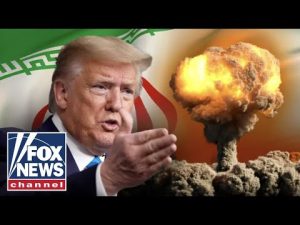
The recent decision by President Trump to engage in military action with Iran has sparked significant debate within the Republican Party, highlighting a growing divide between neoconservatives and more isolationist factions. Throughout his presidency, Trump has repeatedly stated his opposition to war in the Middle East, positioning himself as a critic of foreign interventions that have embroiled the nation in complex conflicts. This stance resonated with many Republican voters, especially younger generations who prioritize avoiding unnecessary military entanglements abroad.
However, the recent developments suggest a shift in Trump’s approach, one that has puzzled and disappointed many within his party. The question on everyone’s mind is: what convinced him to make this move? Some speculate that Trump’s confidence in his unique capabilities and past successes may have played a role in his decision. Others believe that influence from close allies, such as figures in the Israeli government and certain US officials, could have contributed to the change in stance.
Trump’s decision appears to mirror a historical precedent set by previous administrations where promises of non-intervention gave way to military actions. The administration of George W. Bush offers a striking parallel. Campaigning against foreign entanglements, Bush later found his presidency defined by wars in Afghanistan and Iraq following the 9/11 attacks. Trump initially criticized such interventions, but his recent actions suggest a departure from the isolationist philosophy he once promoted.
It’s essential to consider the internal dynamics at play within the administration. Reports indicate that Vice President Mike Pence, among other officials, expressed skepticism about the military strikes on Iran. While loyal to the president’s decisions, these individuals seemingly reflect a broader reluctance among some in Trump’s circle to engage in war. This presents a stark contrast with the core supporters who, reportedly, are more open to this approach.
As the dust settles, many Republicans are left grappling with the uncertainty of this new direction. The decision to engage militarily with Iran raises questions about the party’s future, as it attempts to balance the conflicting ideologies within its ranks. The Republican Party stands at a crossroads, debating whether to embrace a neoconservative approach reminiscent of previous decades or to continue down a path of cautious isolationism favored by a younger, evolving base. The outcome of this debate will significantly shape the party’s identity and strategic goals in the coming years.