**Trump’s Bold Move: A Friendly Takeover of Cuba?**
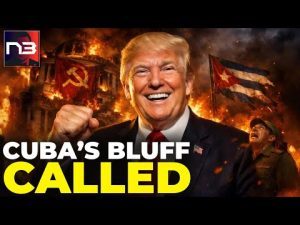
In a shocking twist of events, former President Trump has thrown a political curveball that has both supporters and skeptics buzzing. Following the tragic deaths of four Americans at the hands of Cuban forces, the former president’s suggestion of a “friendly takeover” of Cuba has sparked unprecedented debate. It’s a phrase that would make even the most seasoned political strategist double-take, especially considering the gravity of U.S.-Cuba relations over the past six decades.
To understand the significance, one must remember that Cuba has long been a thorn in America’s side, just a mere 90 miles away and teeming with hostility. Trump’s proposal comes amidst a backdrop of rising tensions, as several American citizens tragically lost their lives in international waters, allegedly due to the Cuban military. As the establishment in Washington tries to grasp the implications of such a bold statement, it’s crucial to consider Trump’s historical approach to foreign policy, which tends to combine negotiation with a hefty dose of pressure.
The backbone of Trump’s stance is a notable shift in the U.S.’s longstanding strategy towards Cuba, one that seems to be veering away from the typical diplomatic niceties and more towards a form of economic and political pressure. With Cuba reportedly in dire straits financially, the prospect of a “friendly takeover” could signal an intention to capitalize on their vulnerability, pushing for reforms that would benefit not only the Cuban people but also national interests. If successful, this strategy could indeed become one of the most significant geopolitical shifts since the Cold War.
Meanwhile, the situation appears to be much more complicated than it seems on the surface. Secretary Rubio has already begun investigations into the circumstances surrounding the deadly boat incident, suggesting that a more sinister motive could be at play. Reports hint at the possibility that Cuba may have intentionally provoked this confrontation as a test of resolve against the United States. If this theory holds water, it puts a whole new spin on the notion of a “friendly takeover.”
As the investigation unfolds, concerns extend beyond mere diplomatic tensions. There’s a growing worry about America’s reliance on foreign nations for essential supplies, especially in the realm of uranium. The U.S. is now working on restoring its domestic enrichment capabilities, indicating that national security is very much tied to energy independence. This issue is paramount, as it raises questions about the extent to which foreign policy and domestic security are intertwined.
Ultimately, the path forward remains uncertain. Trump’s idea for a friendly takeover is not just about political talks; it’s about delivering a clear message to Cuba and potential adversaries that America will no longer stand idly by, especially when its citizens are in danger. The stakes are sky-high, and the outcome could reshape U.S.-Cuba relations for generations to come. While the mainstream media may not be clamoring to share these details, now more than ever, American families need to understand the seriousness of the situation at hand.
In the world of global politics, one thing is clear: a friendly takeover may sound like a phrase out of a box-office hit, but in the realm of U.S. foreign policy, it could be the plot twist that leads to liberation and reform. As the dust settles and investigations continue, Americans are left wondering what the future holds. The question now remains—do you support Trump’s assertive approach to Cuba? Only time will tell the outcome of this unfolding story, but one thing is for sure: it’s a much watch for any political aficionado.