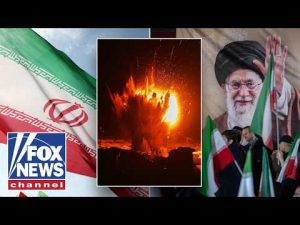
As Vice President Vance and U.S. negotiators settle into Switzerland for high-stakes talks with Iran, the tension on the international stage is as combustible as a Fourth of July barbecue left unattended. The negotiations revolve around Iran’s much-criticized nuclear program and the strategic Strait of Hormuz, which, for some inexplicable reason, Iran’s Revolutionary Guard Corps (IRGC) decided would look much better closed.
Many Americans may shrug their shoulders at the mention of “nuclear talks,” thinking it sounds like another chapter from a high school history book. But make no mistake, this is not just ancient history being replayed. Iran’s President Masoud Pezeshkian is staunchly claiming his land’s right to enrich uranium, a bit like a child refusing to relinquish their claim on the biggest slice of pie. His confidence seems bolstered by a perceived change in the winds from across the ocean, though President Trump is quick to remind him of the storm that might just rain down if Iran doesn’t play ball.
Across the playground, tension is equally palpable. The exchange of fire between Hezbollah and the Israeli Defense Forces in Lebanon has brought fresh waves of grief, with five Israeli soldiers losing their lives over the weekend. President Trump’s social media prowess appears in full bloom as he demands that Iran reigns in its well-paid proxies, or face consequences that might just make last week’s missile mischief look like child’s play.
The situation has led some observers, spilling their coffee in deference to tradition, to lament the vice president’s involvement in what they see as an MOU that carries as much weight as a paper airplane against a thunderstorm. These high-flying conversations might only be half of the halftime show with Iran, and many wonder if they will end up leading back to the starting line.
Meanwhile, the expectation of the United States developing a “normal” relationship with Iran sounds almost as puzzling as trying to find a missing sock in the laundry. With regime change being the essential goal for any such transformation, one might ask if the Play-Dough politics of the Middle East will ever mold into the desired shape, or if they’re destined to be knocked aside in the next gust of geopolitical winds.
In the end, despite the calm faces and diplomatic dances in Switzerland, many questions remain. Will there be an agreement that genuinely reframes the relationship between the West and Iran? Could Iran ever become the ally it once was before 1978? And will the American public have to familiarize themselves again with Iran beyond just associating it with nuclear reactors and oil? For now, it seems we shall wait, popcorn in hand, for the next episode in this gripping international drama.