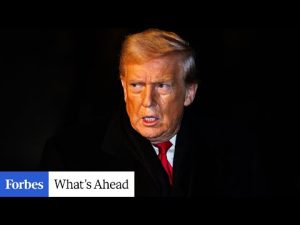
**The Dollar Dilemma: Why a Weak Currency Isn’t a Win for America**
In a recent discussion, former President Trump stated that a declining dollar could be a good thing, but that notion has raised a few eyebrows among economists and political analysts. The truth is, a weak dollar could spell big trouble for the economy and the future of the country, and it’s important to understand why. Imagine trying to build a house on a shaky foundation; it might look fine at first, but sooner or later, disaster is bound to strike.
When the dollar’s value takes a nosedive, it can lead straight to monetary inflation. Inflation, in simple terms, is when the purchasing power of money diminishes. This phenomenon can have dire consequences, not just for presidents, but for all Americans. The memories of the economic turmoil during the presidencies of Nixon, Carter, and Bush are hard to forget, and many fear a similar fate could await President Biden due to rising inflation. So why is Trump cheering for a decline in the dollar? Some economic theories suggest that a cheaper dollar can make American exports more attractive and boost domestic sales. Sounds great, right? Well, not exactly.
In reality, these so-called benefits are often fleeting. The effect of a weaker dollar can be likened to consuming too much sugar; you might feel a quick boost followed by an inevitable crash. Prices adjust, consumer habits change, and before anyone realizes it, the supposed advantages fade away into thin air. What seems like a quick fix can turn into a hidden tax, undermining the economy and diminishing trust in the future. History has shown that devaluing currencies can usher in tough times, as experienced in the 1970s and again in the early 2000s.
One has to wonder if Trump has considered the historical patterns surrounding a weak dollar. After inheriting an economy from Biden that was already on shaky ground, what will be his legacy when he leaves the Oval Office? Many remember how George W. Bush’s presidency ended at the height of economic distress partly due to a declining dollar. The stock market may bubble up momentarily, luring in investors like a sweet donut, but once the sugar rush fades, chaos can unfold, leading to recession and financial despair.
The underlying lesson is that a stable and trustworthy dollar is vital for national strength. Countries with strong currencies, like Britain and the Netherlands historically, have managed to become global powerhouses, while the U.S. saw its own rise when the dollar became as solid as gold. Instead of promoting a weak dollar, Trump should focus on elevating the greenback to its rightful place as the undisputed king of currencies. This would send a clear message to emerging contenders like China and Russia, who dream of challenging the dollar’s supremacy in international trade.
The path forward requires a reevaluation of Federal Reserve policies. Many economists argue that the Fed operates under a misguided assumption that inflation is a positive outcome of prosperity. This belief fails to consider the true value and stability of the dollar. To navigate the stormy seas of today’s economic climate, the Fed must prioritize a sturdy dollar over attempts to manipulate the economy through interest rates. With global debts piling up and weak currencies struggling everywhere, the next Fed chair must recognize the importance of a reliable dollar.
In summary, while some may celebrate the idea of a weaker currency as a potential economic booster, the evidence suggests otherwise. It can lead to instability, inflation, and ultimately, disaster. For the sake of America’s economic future, it’s time for the powers that be to heed history’s lessons and stand tall for a strong dollar. The stakes are too high for anything less.