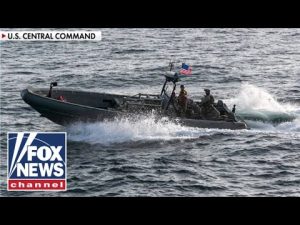
The ongoing conflict between the United States and Iran has reached a new and serious level. The U.S. has begun seizing vessels connected to Iran and has even released footage of these operations, showcasing a new phase of what officials are calling “economic fury.” This term refers to a pressure campaign that follows a previous bombing campaign dubbed “epic fury.” The crux of this situation lies in the U.S. imposing a blockade on Iranian ports, effectively cutting off hundreds of millions of dollars each day that Iran relies on for international trade. Legal experts point out that this blockade could be considered an act of war, and U.S. ships and aircraft are now actively enforcing it across critical waterways like the Gulf of Oman and the Arabian Sea.
As tensions escalate, U.S. forces have been quite clear about their intentions. Vessels that attempt to evade the blockade face serious consequences, including being disabled and boarded by U.S. teams. Just recently, a container ship named Tuska tried to escape the blockade, but the U.S. response was swift, demonstrating the seriousness of their enforcement actions. This is not just a localized issue, as the crackdown on Iran-linked ships has expanded beyond the Middle East, reaching into the Indo-Pacific, where American forces boarded a stateless vessel named Tiffany. This ship was found to be transporting approximately 2 million barrels of Iranian oil. By cutting off Iran’s ability to ship oil, the U.S. aims to choke off funding for the Iranian regime’s military activities.
The strategy here is reminiscent of a similar campaign the U.S. initiated against Venezuela, where they effectively used seizure warrants to halt operations of so-called “dark fleet” vessels. This tactic not only disrupts shipments but aims to suffocate the economic lifeline that fuels Iran’s aggressive actions in the region and beyond. The Trump administration is currently working actively with the Defense, State, and Treasury Departments to exert maximum economic pressure on Iran, all while keeping the dialogue for a peace deal on the back burner.
However, this being the world of diplomacy and military might, things are not entirely straightforward. With the pressure mounting on Iran, the regime retaliated by launching attacks on commercial ships near its coast. Iran has made it clear that they will not consider resuming negotiations until the U.S. lifts the blockade. This sets the stage for a game of high-stakes poker where each side holds a critical card: for the U.S., it’s the blockade; for Iran, it’s the threat of hostility and the urgency to eliminate the economic sanctions.
As it stands, President Trump and Treasury Secretary Scott Bessant have expressed their determination to maintain the blockade and pressure campaign until a solid agreement is reached. This portrait of escalating tension illustrates the delicate balance of power and influence in the region. Each maneuver comes with the possibility of further escalation, making this a situation that remains closely monitored by allies and foes alike. With the stakes as high as they are, only time will tell if peace can eventually prevail or if the conflict will dig deeper into turmoil.