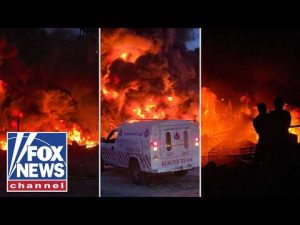
In a dramatic and bold move, the United States and Israel have joined forces to launch a formidable offensive against Iran. This comes in the form of a military operation titled “Operation Epic Fury,” which seems like a catchy name that might have been cooked up by a Hollywood scriptwriter. Meanwhile, the Senate’s attempt to limit President Trump’s war powers fell apart faster than a house of cards in a windstorm. Despite some bipartisan mingling—Rand Paul crossing the aisle with the Democrats, and John Fetterman making a rare trip across to the Republicans—the measure didn’t make it through. In the meantime, the operation against the Iranian regime’s remnants continues to work its shock and awe magic.
The White House has been playing coy, with officials carefully avoiding labeling the situation as a war—until President Trump decided to dispel any uncertainty by calling it precisely that. Although he avoided dubbing it a “regime change war,” he painted a picture of a conflict where leaders who want to play boss end up on the wrong side of history. It’s a narrative that seems to suit him just fine, given his trademark flair for the dramatic.
As the missiles fly faster than tweets from a politician’s smartphone, the U.S. finds itself in dire need of replenishing its weapon stockpiles. In fact, defense contractors like Raytheon, known for their Tomahawk missiles, have become hot properties. A deal intended for 57 missiles has suddenly ballooned to a request for a thousand a year. One wonders if these popular missiles will soon need a separate wing in the Pentagon simply to handle all this new demand.
In the face of such grave happenings, President Trump appears unusually calm, like a man who has seen it all and has nothing to lose. The President’s nonchalant demeanor contrasts sharply with the urgency of the situation. Perhaps it’s because he has secrets up his sleeve, like a magician with a rabbit in his hat. With Israeli Prime Minister Benjamin Netanyahu providing a tip-off about key Iranian leaders convening in one place, Trump had intel that was strategically tucked away as he talked about the conflict.
In these crucial moments, American troops are bravely deployed, and the U.S. President carries himself with the assurance of someone with privileged information and little regard for timetables or polls. As the operation unfolds, the true extent of the intel behind Trump’s composure remains an enigma, much like the man himself. No doubt, there will be more revelations and maneuvers in this unfolding saga. In the meantime, the public, armed with their popcorn and political opinions, will be watching the geopolitical theater unfold from the comfort of their screens.