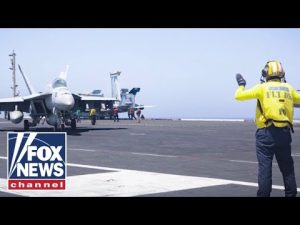
In the ever-volatile chess game of international politics, it seems like Iran is more of a pawn than a player. Recent discussions on a conservative news channel highlighted the precarious position of Iran, with some commentators suggesting that the regime is merely clinging to survival by stringing together vague hopes and shallow negotiations rather than holding any real power. Iran’s tactic appears to be as simple as a delay and distract strategy, hoping that through endless negotiations and persistent delaying tactics, they might outlast external pressures until a more favorable political climate emerges in the West.
The United States, on the other hand, seems to hold all the cards in this strategic game of geopolitics. Military options remain aplenty, though they wisely avoid the quagmire of a full-scale ground invasion that history teaches can be as sticky as quicksand. Instead, the U.S. has adeptly wielded its economic might like a master painter with a varied palette, using sanctions and blockades as its brushstrokes to create a landscape where the Iranian economy is rapidly eroding. Let’s just say their ship isn’t sailing too smoothly, especially when each seized vessel costs them an enormous chunk of change.
The narrative also touches on the internal strife within Iran’s regime, an intriguing soap opera of conflict that seems to play out behind the closed doors of Tehran’s ruling elite. Different factions, from the revolutionary guards to the theocrats, are reportedly at each other’s throats, caught in a bitter mix of paranoia and power struggles. These internal tensions only exacerbate the regime’s weak position, highlighting how they’re more focused on infighting than actually improving their standing on the world stage. It seems that the Ayatollahs are more concerned with staying afloat and keeping their heads attached to their necks than anything else.
Meanwhile, the suggestion that the United States could escalate to more intense military actions remains an open card on the table. The capability to take out bridges, disrupt power grids, or even suppress entire fleets sits within reach like a shiny forbidden fruit, always present but just out of Iran’s ability to control or counteract. The question remains whether this tactics board will actually need all its pieces played or if the current stance will suffice in crumbling Iran’s defenses from within.
At the heart of this discussion lies a political undercurrent that suggests the left, both domestic and international, may dislike one Donald Trump more than they appreciate a strong U.S. position on the global front. Certainly, it provides for a cynical chuckle to consider that some might rather tank U.S. success than admit any personal distaste for orange unto itself. Whether or not this undercurrent significantly influences actions and negotiations, or merely makes for speculative fodder for pundits, it paints an interesting picture nonetheless.