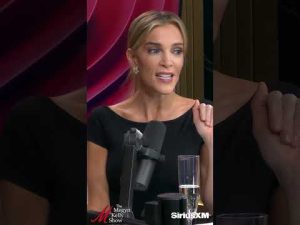
As the political landscape heats up with the midterms on the horizon, a fascinating rift is beginning to emerge within the Democratic Party. The division could be the key to understanding the dynamics of the upcoming elections. Over on a well-known conservative news outlet, a panel of political minds discussed these shifts, showcasing the contrasting views that are so much part of today’s political narrative.
Congressman Jim Clyburn from South Carolina taken to the airwaves recently, shared his thoughts on the SAVE Act—a vital piece of legislation that aims to address voter rights. However, instead of focusing on voter identification, Clyburn decided to invoke post-Civil War America and the era of Jim Crow laws. This rhetoric is setting the tone for a broader conversation among Democrats. As the panel discussed, it appears that while some Democrats cling tightly to extreme narratives from the past, others are calling for a more moderate approach.
Moving further into the discussion, trial attorney Nicole Bernetti noted how the division in the Democratic Party could actually be advantageous for the GOP. The radical elements seem to dominate the party’s direction, leaving moderate voices to feel somewhat abandoned. As the host pointed out, most everyday Americans—those quietly enjoying their breakfast—are not on board with this radical agenda and instead, favor straightforward measures like voter ID laws, which they see as common sense. Voter ID seems to be an issue that even the most casual observer of politics can agree on; it’s a simple matter that shouldn’t require endless debates.
Senator John Federman of Pennsylvania recently echoed a sentiment that strikes at the heart of this Democratic dilemma. He lamented that many of his colleagues had resorted to running purely on anti-Trump sentiments rather than offering substantial policies. Even more compelling is that Federman, who once radiated leftist ideology, has seemingly become the voice of reason in this maelstrom. Armed with a more rationale outlook, he invites his fellow Democrats to rethink their approach. The fight against Trump in both campaign ads and speeches has become unraveling, revealing a party that may be losing its way.
The panelists couldn’t help but chuckle at how Federman, once perceived as a staunch liberal, now resembles a more centrist figure—perhaps even leaning toward Republican values. It’s almost poetic that a health scare could prompt such a transformation. With his casual style, he’s become relatable to middle America, suggesting that sometimes, life events can bring clarity to one’s biography and lead to unexpected political turns. The panelists contemplated just how different things might have been if Federman had kept the status quo without that stark wake-up call.
As the dust settles and the midterms loom, one fact becomes clearer: the fracture within the Democratic Party is palpable. On one side, there are those who cling to radical ideologies and far-off rhetoric, while on the other, moderates like Federman are recognizing the need for change and clear policies. In the race to capture voter attention, Democrats may soon find that providing practical solutions is a necessity, not an option. With common sense still prevailing among the lions of the electorate, the upcoming elections promise to be an exciting spectacle.