In an era where geopolitical tensions dominate headlines, the recent remarks from the Chinese president during a bilateral meeting have set off ripples across the global political landscape. By invoking the Thucydides Trap, the concept that highlights the potential for war when a rising power threatens to displace a ruling one, China sent a bold, provocative signal to the United States. This isn’t mere diplomacy; this is a declaration of ambition. The narrative seems clear: while the United States appears to stumble, China is not shy about announcing its steady ascent as a global superpower by 2050.
The Chinese president’s challenge wasn’t only a general comment on international dynamics but was a direct call into question America’s perceived decline. The emerging power dynamics are reminiscent of historical shifts that have led to conflict, like that of Sparta and Athens. The distinction here is that while past contests led to open warfare, today’s conflicts play out on economic, cultural, and technological battlefields, with both superpowers possessing nuclear arsenals. The possibility of an all-out conflict, therefore, looms large over the global community.
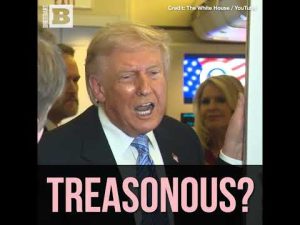
Amidst this tense backdrop, the response from former President Trump was unexpectedly diplomatic. Though it was a pointed jab broadly understood as an insult to the United States, Trump deflected the criticism toward President Biden’s administration, suggesting America’s decline began under current leadership. This strategic deflection could be seen as an attempt to maintain diplomatic ties by derailing focus from the broader critique. Yet, it’s crucial that Trump and other leaders recognize the full scope of what was articulated by China and understand that it’s symptomatic of larger strategic ambitions and not just a short-term political challenge.
Furthermore, there are contradictions within the U.S. establishment, particularly concerning China’s role in American economic life. The affection from Wall Street and major corporations towards China highlights the ongoing dependency on Chinese markets and manufacturing capabilities. Despite political rhetoric, these economic entanglements complicate the narrative of rivalry, reflecting a deeper struggle between national interest and economic pragmatism. It underscores a fundamental conflict: acknowledging the push for independence from China’s supply chain influence, versus the allure of cheap labor and market access.
As policymakers and leaders grapple with this complex dynamic, America must reconcile its economic strategies with its geopolitical goals. The nation faces a competitor that is increasingly bold and seemingly positioned for rise, all the while being deeply interwoven into the American economy. If the United States is to navigate this new era effectively, it will require shrewd diplomacy coupled with policies that reinforce American strength and independence. The challenge is considerable, but essential for maintaining the nation’s position on the world stage.