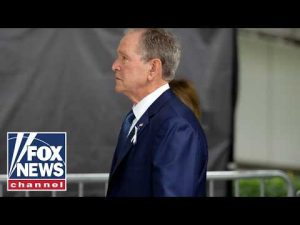
Reflecting on that unforgettable day, two and a half decades ago, is inevitably filled with a complex swirl of emotions. September 11th, 2001, was a day that reshaped the world. For President George W. Bush, who was reading to a group of schoolchildren in Sarasota, Florida, it was a day that demanded every ounce of resolve and leadership. While some folks might roll their eyes at politicians flying around in jets, that day, Air Force One became much more than a luxurious mode of transport—it was a flying command center crucial to national security.
At the helm of Air Force One was Colonel Mark Tilman, the stoic pilot tasked with ensuring President Bush’s safety in the midst of chaos. Tilman shared riveting insights into the air of confusion that enveloped their flight as they learned about the attacks. Initially, the reports they received suggested an aircraft accident, underestimating what was unfolding as one of the most significant national emergencies this generation would face. Evidently, the news networks were proving more reliable than official lines of communication. One would think an advanced military command would have one up on the cable news, but alas, it was a day full of surprises.
Colonel Tilman’s task was formidable: protect the president when every conceivable threat loomed, both known and unknown. While the inclination to return to Washington, D.C. was strong, the urgent priority was ensuring the president’s safety. This protocol saw a change in course from the heart of the capital to Barksdale Air Force Base in Louisiana. As the uncertainty deepened, the administration’s continuity of government plan was rolled out, with Vice President Dick Cheney secured and Defense Secretary Donald Rumsfeld momentarily unreachable. You have to wonder if Rumsfeld was momentarily considering his own private bunker.
From Barksdale, the journey continued—a cautious strategic dance across the skies—eventually moving to Offutt Air Force Base in Nebraska. It was an exhausting exercise in caution and discretion. While some suggested they hunker down underground at a secure location, in true Texan style, President Bush opted for action over safety. His resolve to return to Washington triumphantly ultimately won out, highlighting his commitment to leading the nation from where he should, not from a distant base wearing a metaphorical “Dunce cap.”
In reflecting on the relentless sequence of decisions and movements that day, one is reminded of the remarkable effort from a vast network of people. First responders in New York, military personnel across the nation, and government officials each played their role. The tragedy was undeniable, and the wounds were many, but the stoic image of President Bush returning to Washington, orchestrated by deft individuals like Colonel Tilman, is a singular reminder of resilience. Amidst the fear and confusion, America was standing strong despite flying high in the adversities of that grave day.