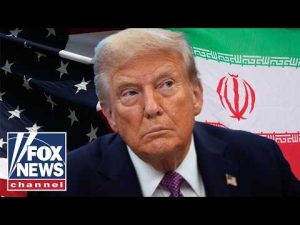
This morning, news is buzzing about the United States nearing a peace agreement to end the conflict with Iran. However, to say that’s the whole story would be as accurate as calling December a “warm” month in Minnesota. The ongoing saga with Iran is as complex as ever, and the recent talks are just another chapter in a long, winding narrative that’s filled with intrigue, conflict, and, unfortunately, a lot of hardship.
Let’s start with Iran, a country currently facing economic turmoil reminiscent of the Great Depression, albeit with a modern twist. Inflation has skyrocketed over 73%, and if that’s not jaw-dropping enough, the price of food alone is up by a staggering 115%. You’d spend less filling your cart at a grocery store on the moon. The Iranian currency, the rial, has fared no better, taking close to 1.7 million of them to get a single U.S. dollar in the market. Suffice it to say, it’s not a good time to be doing a currency conversion in Tehran.
Now, don’t forget the fuel crisis. Motorists in Iran are spending hours in gas lines, thanks to fuel rationing compounded by the damage caused during Operation Epic Fury. That’s right, folks, it’s not just the economy that’s run out of gas; their cars have, too. With all this going on, it’s no wonder that people in Iran are fed up and demanding change. But the regime, firmly set in its authoritarian ways, has cracked down on dissidents, executing at least 28 individuals since mid-March for daring to ask for those pesky things like freedom and human rights.
President Trump, meanwhile, is reportedly burning the midnight oil to finalize a peace agreement with what’s left of Iran’s ruling regime. But while he might be ready to shake hands, the big question is whether this deal could be the lifeline that the Iranian regime needs to drag out its decades-long reign of repression. Some watchers from the political sidelines are nervous about this development, concerned that any deal might end up resembling buying a used car from a notoriously shady dealer—you just know those wheels won’t go the distance.
The regime’s credibility—or lack thereof—is a sore subject for many, given their 47-year track record of defying agreements, oppressing their own people, and engaging in acts deemed internationally untoward. As President Trump continues his strategic gambit of maximum pressure—a policy that has seen more success than most of its predecessors—it begs the question: Is staying firm against such a regime a more effective path than trying to compromise with one that’s proven less reliable than a student making last-minute excuses?
The people of Iran have shown they are not content with simply waiting for freedom on a silver platter. Many have risked and lost their lives in the struggle for their country’s liberation. President Trump seems to recognize this, but only time—and the elusive details of the peace agreement—will tell if this moment becomes a pivot towards a brighter future. If past behavior is any indicator, no one should hold their breath. But, if anyone can pull this off, perhaps it’s the president who has made unpredictable deals his signature style. Let’s see where this diplomatic roulette wheel stops spinning.