**Senator Mike Lee Advocates for Save America Act Amidst Legislative Challenges**
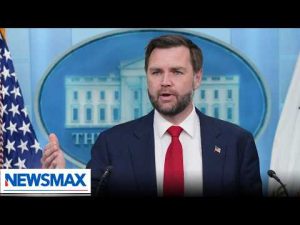
Senator Mike Lee recently appeared on a conservative news channel where he discussed the pressing need for the Save America Act. This legislation, aimed at bolstering election security, has garnered overwhelming support from the American public—somewhere between 70 and 80 percent depending on which poll you consult. However, it seems that some Senate leaders are dragging their feet, leaving Lee and other supporters frustrated. It’s almost as if they’re trying to solve a Rubik’s Cube with one hand tied behind their backs.
During his discussion, Lee highlighted a common misconception within the Senate. Many assume that closure votes are the only way to overcome a filibuster, but Lee insists that this isn’t the case. He explained that there are alternative approaches, such as exhausting those delaying the bill by allowing it to be debated on the Senate floor. Lee cited the Civil Rights Act of 1964 as a historical example, where momentum shifted to favor the bill as public support grew, thus compelling even reluctant lawmakers to negotiate a path forward. The message was clear: if the Save America Act is shelved simply because there aren’t enough votes for closure, then those in Congress need to re-evaluate the process and push this vital legislation.
However, there is a roadblock in the form of Senate Majority Leader Mitch McConnell, whose intentions are being scrutinized. Some believe he might not be as onboard as supporters would hope, leading to questions about whether McConnell is truly committed to the legislation’s success. Lee expressed concern that refusing to give the Save America Act a fighting chance while McConnell holds a marginal veto power could undermine the upcoming election’s integrity. It is indeed a precarious situation, almost reminiscent of a game of chess, but with much higher stakes.
On another front, the senator touched on the reauthorization of FISA and the ongoing debates surrounding it. Many fear that lawmakers could use the FISA reauthorization as leverage against the Save America Act. Lee elaborated that while FISA does serve a useful purpose, there’s growing discontent among Americans about the lack of warrant requirements for searching through Americans’ private communications. He proposed a simple solution: if lawmakers want the support of conservatives for FISA, they should include a provision that ensures warrants are needed for U.S. citizen queries. This is straightforward enough, yet the resistance from some sectors of Congress is puzzling at best.
Amidst these challenges, Lee urged citizens to advocate for their preferences. He encouraged the American people to voice their opinions through letters, social media posts, and other avenues to ensure their representatives understand their stance on key issues. This isn’t just a call to action; it’s also a reminder that legislating is a two-way street—lawmakers need to listen to the people they represent. It might feel like a daunting task, but expressing views could very well be the nudge needed to get important legislation moving.
As the political landscape shifts with more elections on the horizon, Lee remains cautious yet hopeful. He understands the difficulties that lie ahead but insists that the Save America Act’s importance cannot be overstated, especially with the future of election integrity at stake. Whether Republicans can outmaneuver the traps set by their counterparts remains to be seen, but one thing is for sure: politicians who ignore the will of the people might find themselves on the wrong side of history. And in politics, that’s a position nobody wants to find themselves in—especially when the stakes are this high.