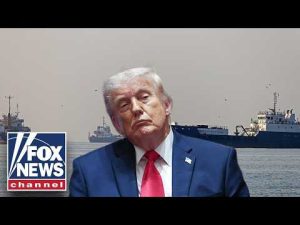
In the political chess game that is the Middle East, it looks like the United States has made its move and is waiting for Iran to respond. The skies over Iran were unusually quiet, marking a rare pause in what has been nearly two weeks of relentless air strikes. Not a peep from the planes, which must have been quite the anomaly after almost two weeks of nightly action. Meanwhile, out in the sea, the U.S. is turning heads with its assertive naval blockade. There’s nothing like a showdown in the Gulf of Oman to keep things interesting, especially when you have ships trying to defy the blockade four times—if at first you don’t succeed, try, try again, right? Apparently, persistence doesn’t pay off if it gets your engine room shot up.
Predictably, all eyes are on President Trump, who holds in his hands a decision as critical as his morning Twitter routine. The Oval Office has been buzzing with anticipation for his next move on Iran. The president has hinted at the arsenal of options available to him. It’s kind of like choosing between ordering a fancy dinner or just going for the trusty burger—one might be easier, but the other is oh-so-tempting. Trump isn’t one to tease without action, and he’s made it clear they’re prepared to up the ante. You could say they’re ‘locked and loaded,’ ready to spring into action faster than you can say “strategic options.”
Things aren’t just simmering in the Gulf of Oman. Over in the Red Sea, Houthi rebels decided to have a little target practice, aiming at Saudi tankers. These fireworks on the water temporarily sent oil prices jumping, undoubtedly causing a ripple of panic amongst those who dabble in the delicacies of international oil markets. If these shenanigans continue, it could very well become a second hot spot in this already tense international landscape. It’s essential to keep an eye on these rebels, whose actions might escalate into something much more significant if not addressed properly.
While the seas and skies experience their respective dramas, one must wonder what magic formula will resolve these tensions. Diplomatic talking, warnings, blockades, and the occasional suggestion of something more drastic seem to be the current playbook. Yet, the crucial question remains: will Iran take the bait and engage in productive talks, or are they waiting for the situation to boil over? It’s a test of nerves, where patience and strategy are as paramount as firepower.
As the world waits with bated breath, pondering this tightrope walk of diplomacy and potential military escalation, it’s crucial to remember that conflicts like these shape international relations and economic landscapes. In times of geopolitical tension, every move is significant, every decision calculated, and every day brings fresh developments. So, sit tight, grab some popcorn, and stay tuned, folks. This geopolitical thriller isn’t wrapping up any time soon.