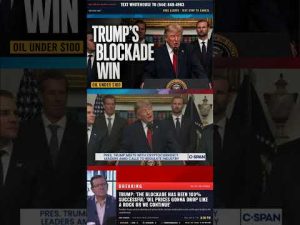
In a lively discussion about oil prices and the ongoing sanctions against Iran, President Trump painted a picture that suggests optimism for the American energy landscape. During an interview, he highlighted the effectiveness of the naval blockade currently restricting maritime access to Iran. Surprisingly, this blockade has resulted in zero boats successfully reaching Iranian ports, a remarkable statistic given the dire predictions from some experts. In fact, instead of seeing oil prices skyrocket as some feared, they have remained surprisingly stable in the mid-$80s per barrel.
The president didn’t mince words about the potential impact of these sanctions on Iranian oil exports. He noted that while the Strait is currently open, the naval blockade is making a significant difference. The blockade has been in place for quite some time, with only minor interruptions for negotiations, which have not yielded the promised results. This situation underscores a growing rift between U.S. expectations and Iranian actions, indicating that pressure is mounting on Iran’s economy.
One of the most striking parts of Trump’s remarks was his mention of the astronomical prices projected by analysts—up to $350 a barrel—and the current reality of prices in the mid-$80s range. While some experts were bracing for an oil market apocalypse, it seems that innovative solutions from states like Texas, Alaska, and Louisiana are changing the game. The sheer volume of oil being produced domestically has clearly shifted the dynamics away from dependence on Iranian exports.
Record numbers of pipelines are being constructed, signaling a significant investment in American energy independence. In this new landscape, oil companies are finding alternative sources and tapping into reserves that were previously overlooked. This movement not only bolsters national security but also shields consumers from the volatility of international oil markets. The market is gradually adapting, and it appears that the fears of runaway prices may have been unfounded.
As the situation develops, all eyes will be on the Treasury’s impending sanctions on Iran, as hinted at by the president. These sanctions have the potential to exert even more pressure on Iran’s economy, forcing it to reevaluate its position on the global stage. The ongoing naval blockade, along with domestic production efforts, could mean that the stranglehold some feared would occur through the Strait may not materialize.
In conclusion, the predictions of economic disaster appear to be off the mark, with the American energy sector stepping up in a big way. With zero boats making it into Iran and oil prices remaining calm, it is clear that the script has flipped. While everyone will be watching to see how things unfold, the message is clear: America is more prepared than ever to weather the storm of international energy politics.