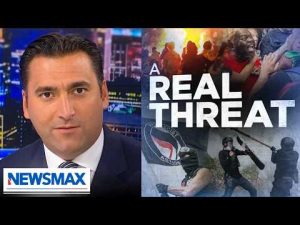
As the sun set behind the smoke-filled horizon, one might have thought they were witnessing a scene from a blockbuster action movie. However, this was a harsh reality unfolding in America as chaos erupted once again, and like clockwork, Antifa reared its controversial head. Once a term mostly used in political discussions, Antifa has now cemented itself into the everyday lexicon, creating an unsettling familiarity that many would prefer to avoid. With each incident, the reputation of this group is only solidified, stirring the pot of political debate and societal tensions.
It seems that every time the Trump Administration manages to take a significant step forward, a crisis involving Antifa emerges from the shadows. From violent altercations to fiery demonstrations, the group appears to seize the opportunity to disrupt and challenge the administration’s agenda. This leads some to ponder whether there is a connection between the administration’s achievements and the subsequent rise in Antifa’s activities. The chaotic playbook utilized by this self-proclaimed anti-fascist group has many wondering if their consistent appearances are more than mere coincidence.
For years, many ordinary citizens have expressed concerns over the tactics employed by Antifa. Observing individuals clad in paramilitary gear wreaking havoc in city streets has raised eyebrows—and certainly alarms—across the nation. Yet there seems to be a disconnect, as the narrative spun by some on the left is that these are mere gatherings of expressively passionate individuals, participating in harmless protests. It’s hard not to chuckle at the absurdity of claiming a well-equipped group of people, appearing in multiple cities simultaneously in tactical clothing, is merely a coincidental collection of like-minded individuals.
The concept of Antifa being nothing more than an abstract ideology has been floated around, leading one to believe that the political discourse surrounding this group is more about opinion than reality. But to those who have witnessed the destructive capabilities firsthand, it becomes evident that this is far from an imaginary threat. The frustration of everyday Americans is palpable; they see the disruption, the violence, and the anger, while contrasting narratives attempt to downplay the seriousness of the situation.
As the media landscape becomes increasingly monochromatic, many are turning to alternative news sources seeking a more honest portrayal of events. This desire for unfiltered truth strikes a chord as people yearn to hear the actual accounts of what is occurring rather than the polished narratives often seen on mainstream platforms. Individuals want to know they’re getting the full picture, devoid of mere soundbites and political spin. Events involving groups like Antifa compel people to look for trustworthy news that respects their intelligence and provides a comprehensive account of the happenings.
In the end, the question remains—how do citizens respond when faced with political unrest ignited by such groups? Awareness and vigilance become vital. People cannot afford to ignore the reality that there are organized factions equipped to stir up chaos, and the effects of their actions might resonate far beyond the immediate moment. As America navigates these turbulent waters, it must stay attuned to the truth, ensuring that it does not get lost amidst the whirlwind of rhetoric and contradiction surrounding groups like Antifa. The hope is that, with greater understanding and accountability, the nation can chart a more peaceful course forward, away from the fire and chaos that seems to accompany each political turning point.