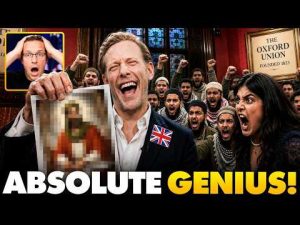
In the quaint yet hallowed halls of the Oxford Union, known widely as one of the oldest debate societies in the world, a drama of grand proportions unfolded, showcasing the collision between free speech and modern societal tensions. Picture this: a revered institution that has debated the world’s most pressing issues for centuries, now transformed into a fiery battleground over the right to speak freely in a society that seems ever more eager to silence dissent. The once-solemn chamber echoed not with lively debate, but with the silhouette of chaos, showing that even in the most serious settings, the absurd can happen.
In what can only be called a twist of irony, Charlie Kirk, an outspoken conservative figure, found himself at the center of this maelstrom. He had attended this venerable institution to engage in what was billed as a civil discourse. Yet, the event took a devastating turn, when it was reported he was metaphorically “shot” – not with bullets, mind you, but with the arrows of outrage aimed at silencing his voice. They no longer just debate at Oxford; it seems the stakes have skyrocketed to life and death, at least rhetorically speaking.
The plot thickened when the president of the Oxford Union, reportedly took what sounded like glee in the metaphorical demise of Kirk. Such a statement doesn’t exactly scream the peaceful debate some might expect from the torchbearers of free expression. Unsurprisingly, the president was soon shown the door, as goodness prevailed, with the senior disciplinary committee stepping in. Perhaps Oxford itself realized that having a leader who cheered on rhetorical violence wasn’t quite the best look for an institution priding itself on open discourse.
A dramatic scene unfolded when Lawrence Fox, one of Britain’s most vocal free speech advocates, decided to step into the spotlight. Armed with nothing more than a piece of paper, Fox orchestrated what was described as a gripping moment by unveiling a drawing of Muhammad. This singular act left the audience in stunned silence. The reactions were nearly theatrical, with gasps echoing through the chamber like they were watching a thriller, proving Fox’s controversial point about the climate of fear surrounding free speech in the face of Islamic intolerance.
As the plot reached its crescendo, a Muslim student insisted that there was no reason to suspect Islam, suggesting that violent extremists weren’t truly representative of their faith. Meanwhile, shouts of indignation from those who felt threatened by the entire scene filled the air, like an orchestra reaching its discordant climax. The drama of the evening boiled down to this bitter cocktail: the paradox of inviting intolerance into a tolerant society and then being surprised when it demands obedience. This episode at Oxford serves as a stark reminder of the battle for free speech—laced with tension, intrigue, and a sprinkle of the absurd.