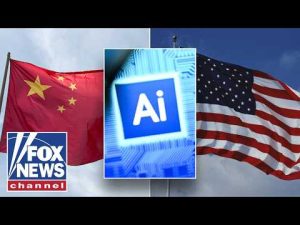
Picture this: you have politicians — the same folks who proved time and again their expertise in making mountains out of molehills — diving headfirst into regulating the complex world of Artificial Intelligence (AI). One might be forgiven for feeling a tad skeptical about the outcome of this marriage between government bureaucracy and hyper-advanced technology. Really, what’s the worst that could happen? Maybe they’ll invent something even more perplexing than AI itself: a bipartisan committee that actually gets things done.
The United States finds itself in an AI arms race with China, likened by some to the Cold War’s nuclear race—except this time, we’re hurtling toward an entirely unknown future. While no one wants an AI Terminator knocking on their door, the notion of falling behind China on AI technology conjures images of a dystopian future more suited for a sci-fi thriller. The threat is real, underscoring the need for clever, not clumsy, oversight. After all, losing this technological sprint could mean more than just losing face — it could mean losing the upper hand in global military superiority. And that, dear readers, is as unsettling as finding a politician who genuinely loathes a camera.
Yet here we are, witnessing the cacophony of voices warning of an AI-driven apocalypse. Some doomsayers appear to have missed the memo that didn’t suggest burning the village to save it. Concerned CEOs highlight how much of this hoopla leans heavily on misinformation and a fear of the unknown. But when has lack of understanding ever stopped a good political panic, right? Some politicians, like Bernie Sanders, seem keen to pump the brakes on AI until they have control. Here’s hoping their strategy is more advanced than “pulling over and waiting for the storm to pass.”
Now, enter the political arena’s greatest showman, former President Barack Obama, who suggests that presidential candidates in 2028 should prioritize AI in their campaign rhetoric. Because nothing screams success like a bunch of senators — historically known for their technological prowess — trying to micromanage machine learning and neural networks. The thought conjures memories of instances where tech-savvy lawmakers dazzled us with their grasp of social media by basically knowing it exists.
All this hand-wringing could make one yearn for simpler times when regulations — or lack thereof — couldn’t accidentally lead to the robot apocalypse. The brighter side, as some suggest, lies in the immense benefits AI could bring: curing diseases, boosting productivity, and unleashing human creativity. Just as long as those in charge remember that technology isn’t a monster to chain up but a tool to wield wisely. Perhaps then, might we see Democrats and Republicans snatch victory from the jaws of this techno-dragon, and not just use it as another cudgel to beat each other over the head with during the next election cycle.