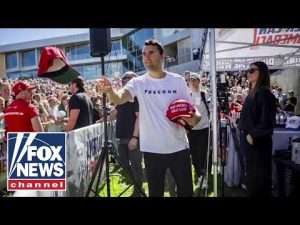
In a tale that seems almost too surreal to be true, tragedy struck at a Turning Point USA event, resulting in the untimely death of conservative firebrand Charlie Kirk. Now, Charlie’s family is taking legal action against the University of Utah and its police department, claiming wrongful death due to what they allege was a glaring security failure. According to the lawsuit filed on September 9th, this is more than just a legal squabble—it’s an accusation of criminal mismanagement, and possibly even worse.
The situation paints a picture as chilling as a suspense novel. Allegedly, the University of Utah had assured rooftop security during Charlie’s event, yet there were only six officers for a crowd of 3,000—hardly the odds you’d want in a game of Pokémon, let alone event security. The absence of crucial oversight had tragic consequences when a rooftop gunman took the life of the charismatic 31-year-old. As the filing claims, not a single officer was assigned to monitor the rooftops, an oversight as monumental as forgetting the candles on a birthday cake.
This isn’t just an isolated case. The past event of a lone gunman targeting President Trump from a rooftop is a reminder that history was almost repeating itself. Why wasn’t more done to prevent this? It’s almost like setting up a dodgeball game with no balls. The lawsuit suggests that a risk assessment might have been nothing more than a fancy phrase in a file somewhere, instead of a robust action plan. The notion of drones surveying the airspace was seemingly as absent as snow in July.
Questions loom as large as these oversights, as Charlie Kirk’s family seeks justice not only for themselves but for what they perceive as systematic negligence. Are we looking at mere incompetence, or something more sinister? The Kirk family believes that with the right security measures—like having access to rooftops, or even a simple drone—the narrative could have been different. This lawsuit might finally shed light on why simple, logical security steps were ignored or outright refused.
In closing, as the legal saga begins to unfold, many hope it brings about a serious overhaul in event security protocols, especially for high-profile figures. The Kirk family, alongside supporters, demand change, ensuring that no other family has to endure such preventable heartbreak. As the saying goes, “fool me once, shame on you; fool me twice, shame on me.” It’s high time institutions start learning from these costly mistakes. The world will be watching, and Charlie Kirk’s legacy will hopefully live on as a catalyst for such critical changes.