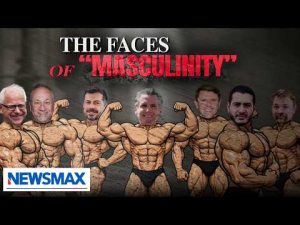
In the ongoing world of political theater, few topics spark as much debate as the concept of masculinity, particularly in the eyes of the Democratic Party. It seems they have embarked on a peculiar journey to understand male voters, treating them like an extraterrestrial species that needs thorough investigation. After splurging a staggering $20 million to study these “alien” creatures, the Democrats continue to grapple with their flawed perception of masculinity. The irony is as thick as pea soup: they simultaneously cast straight white men and conservatives as the greatest threats to democracy while failing to grasp what being a man truly means.
To illustrate this stark disconnect, the Democrats have repeatedly tried to showcase a new face of modern masculinity. However, past attempts have been akin to slapping a band-aid on a gaping wound. Their initial candidates, such as Tim Waltz and Doug Mhof, appeared more like mannequins at a poorly designed Cabela’s store than symbols of robust masculinity. The optics were not ideal, especially when viewers remembered the unfortunate pictures from their infamous outdoor escapades — complete with clothing still carrying the tags — which hardly screamed “tough guy.”
The latest attempt saw the Democrats attempting to present another supposed paragon of masculinity who could “lift weights and shoot guns” while maintaining an emotionally nurturing relationship with his wife. However, rumors and allegations surrounding this figure hinted that he was more concerned with scandal than strength. As political missteps piled higher than a stack of pancakes, it became increasingly clear that the party’s understanding of masculinity was in dire need of a makeover. This led to yet another mission to discover a new champion of liberal manhood.
Enter a peculiar candidate from Texas, a 37-year-old vegan pastor in training who believes that God defies binary classifications. While that may resonate with some, it hardly embodies the conventional image of rugged masculinity that many Americans grew up with. His views on gender and science supposedly suggest the existence of more than just two biological sexes, which feels more like a scene from a surreal comedy than a serious political dialogue. As if that weren’t enough, this candidate also donned a COVID mask while trying to convince a skeptical electorate in the Lone Star State.
Another fascinating character emerged in the form of Abdul Ali from Michigan, who described himself as six feet tall and a former college athlete. However, as scrutiny unraveled, it became clear that his athletic claims were more ‘club’ than ‘varsity.’ Despite these questionable assertions, he believed that the best way to showcase toughness was by making unnecessary digs at the wives of opposing politicians. His antics earned him few admirers. In stark contrast, a prominent Republican made waves defending his spouse with the kind of masculinity that is increasingly rare in today’s political arena.
The Democrats’ journeys in search of a masculine icon could be likened to a sitcom plot where the characters just can’t catch a break. The attempts at portraying an ideal candidate have raised eyebrows, reminding voters of past blunders. From the bungled ‘tank photo’ moment of Mike Dukakis decades ago to a present filled with candidates who can’t seem to embody the very essence of manhood that they preach against, it has been a tumultuous ride. One can’t help but wonder if the Democratic Party is still at the drawing board instead of making strides toward clarity in their gender identity narrative.
With figures like Gavin Newsom and Mayor Pete Budajedge currently in the limelight, the party continues to search for a new face that might resonate with the everyman. Yet their visions seem less about strength and more about pushing boundaries in rapidly changing cultural landscapes, sometimes losing sight of the core values that resonate with many Americans. As the march towards 2024 intensifies, one cannot shake the feeling that the Democratic Party’s efforts to redefine masculinity might confuse more than clarify. In the end, perhaps what is truly needed is a refresher course on what being a man really means—being strong, standing up for one’s beliefs, and knowing when to protect those you love.