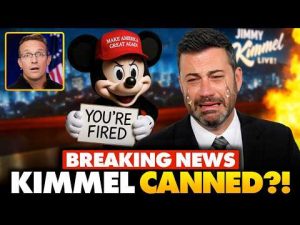
In the world of late-night comedy, there’s always a storm brewing, but this one’s a hurricane named Jimmy Kimmel. The TV host has found himself at the center of attention, and not the kind that gets you award nominations. His recent jabs at the Trump family, especially Melania, have stirred quite the pot of controversy. But let’s rewind a little; this isn’t the first time Kimmel’s comedy has crossed the line for some, especially conservatives who see a pattern of biased zingers that might even make a scalding cup of tea blush.
It all began, according to many folks, when Jimmy Kimmel decided to take a comedic swipe at the former First Lady, Melania Trump, calling her an “expectant widow.” Now, for regular folks like you and me, a comment like that might come off as a less-than-humorous hint about Donald Trump not living long, and well, that’s not exactly comfortable dinner table talk. The joke wasn’t just a jab in poor taste; many see it as a thinly veiled promotion of an idea that the world could do without.
The former First Lady didn’t stand idle. She, along with Donald Trump and a choir of supporters, raised a collective eyebrow and a loud voice. With a staggering number of social media shares, Melania expressed her belief that Kimmel shouldn’t have a prime-time platform to mock her family while hiding behind the ABC shield. The commentary didn’t stop there, as other conservatives echoed the sentiment, asking the network to consider whether Kimmel’s ratings justified the trouble he was causing. After all, no one wants to be part of a high-flying circus when clowns start throwing pies at the audience.
Amidst the uproar, another high-pitched voice joined the choir: that of Chris Cuomo. He pointed out that ABC was making internal moves, reportedly without government nudging, by pulling all promos for Kimmel’s show. While some see this as a step toward accountability, others, like Cuomo, suggest it’s the influence of power play, not concerned viewers, driving these decisions. He implies that if executive anger was about a regulatory hammer, then the President might be seen as heavy-handedly wielding that tool.
The heart of the matter isn’t just a singular bad joke—it’s the question of who should be the moral compass of comedy. There’s the argument that speech, even comedic, shouldn’t be funded by taxpayer dollars if it’s harmful, especially via public networks. Jimmy Kimmel’s shadow seems insured by deep-pocketed backers at ABC, but with ratings slipping and adverts slowing, even the biggest balls of comedy might find their chain cut—slowly, quietly, just not abruptly enough to seem like direct surrender.
In the complex dance of viewers, networks, and the personalities they endorse, tension is like static between stations; it just needs a little nudge to crystal-clear. As for Jimmy Kimmel, the future remains shrouded. Maybe a recalibration is coming, or perhaps a deferent bow out to save face. Whatever the outcome, one thing is sure—a comedian’s stage is a delicate balance between the spotlight and the shadow, where each joke can either spark laughter or set off fireworks.