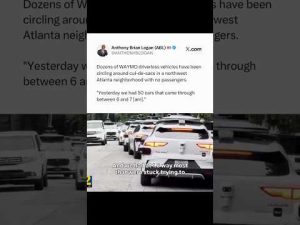
In a quaint neighborhood of northwest Atlanta, residents are experiencing an unexpected and unwelcome guest: a fleet of autonomous vehicles known as Whimos. This isn’t an occasional sighting; it’s a daily invasion. Dozens of these self-driving cars are turning the cul-de-sacs into what feels like a robotic merry-go-round. The concern of parents and neighbors is palpable as they watch these cars circle their streets in the early hours of the morning, seemingly without purpose. Their frustrations are only amplified as they notice the vehicles are empty, adding an element of absurdity and concern to their presence.
Residents are understandably bewildered by this new routine that has been imposed on their quiet community. The confusion turned into action when neighbors placed objects in the street to block the vehicles, turning the situation into an almost comical scene of stalled cars unsure of how to maneuver around the obstacle. While this maneuver provided some temporary relief, it also highlighted the lack of oversight and effectiveness of these autonomous vehicles in understanding and adapting to unexpected changes in their environment.
The real issue at hand is safety. The concerns expressed by the community are not only reasonable; they are urgent. Parents fear for their children who are heading to the bus stop amidst this unexpected traffic. Pets and pedestrians are at risk due to the erratic and unpredictable nature of these driverless cars. The community questions the necessity of such vehicles in their small, residential streets when they’re not actively serving a purpose, like picking up passengers. It’s a common-sense query: Why not keep these technical marvels on main roads where they are less likely to cause confusion and more likely to fulfill their intended purpose?
Efforts to address these concerns are currently stuck in bureaucratic limbo. Communication with the company responsible for the vehicles has been met with silence, and local government representatives appear to be at a loss. This situation underscores a broader issue with the rapid advancement of technology outpacing the regulatory frameworks needed to govern it. Communities like the one in northwest Atlanta deserve better coordination and communication from tech companies, especially when their products directly impact people’s daily lives.
Ultimately, this situation is a vivid example of technology’s growing pains. While innovation drives progress, it must also consider the human element—how it affects our communities, our safety, and our peace of mind. Autonomous vehicles offer exciting possibilities for the future, but the implementation must be done with care, addressing the real-world impacts on everyday people. It’s a wake-up call that emphasizes the need for balance between innovation and common sense, ensuring that technology serves humanity, not disrupts it.